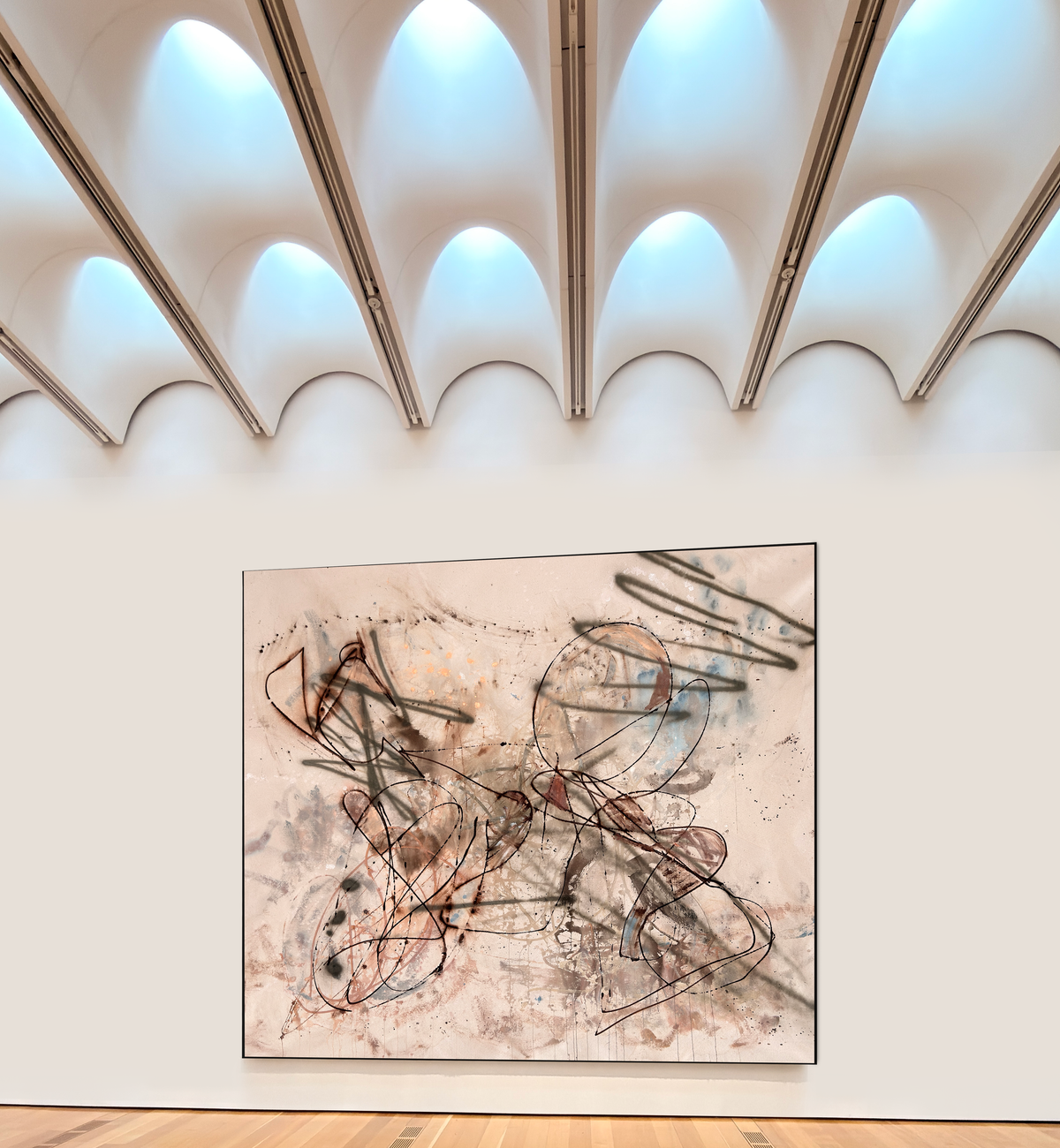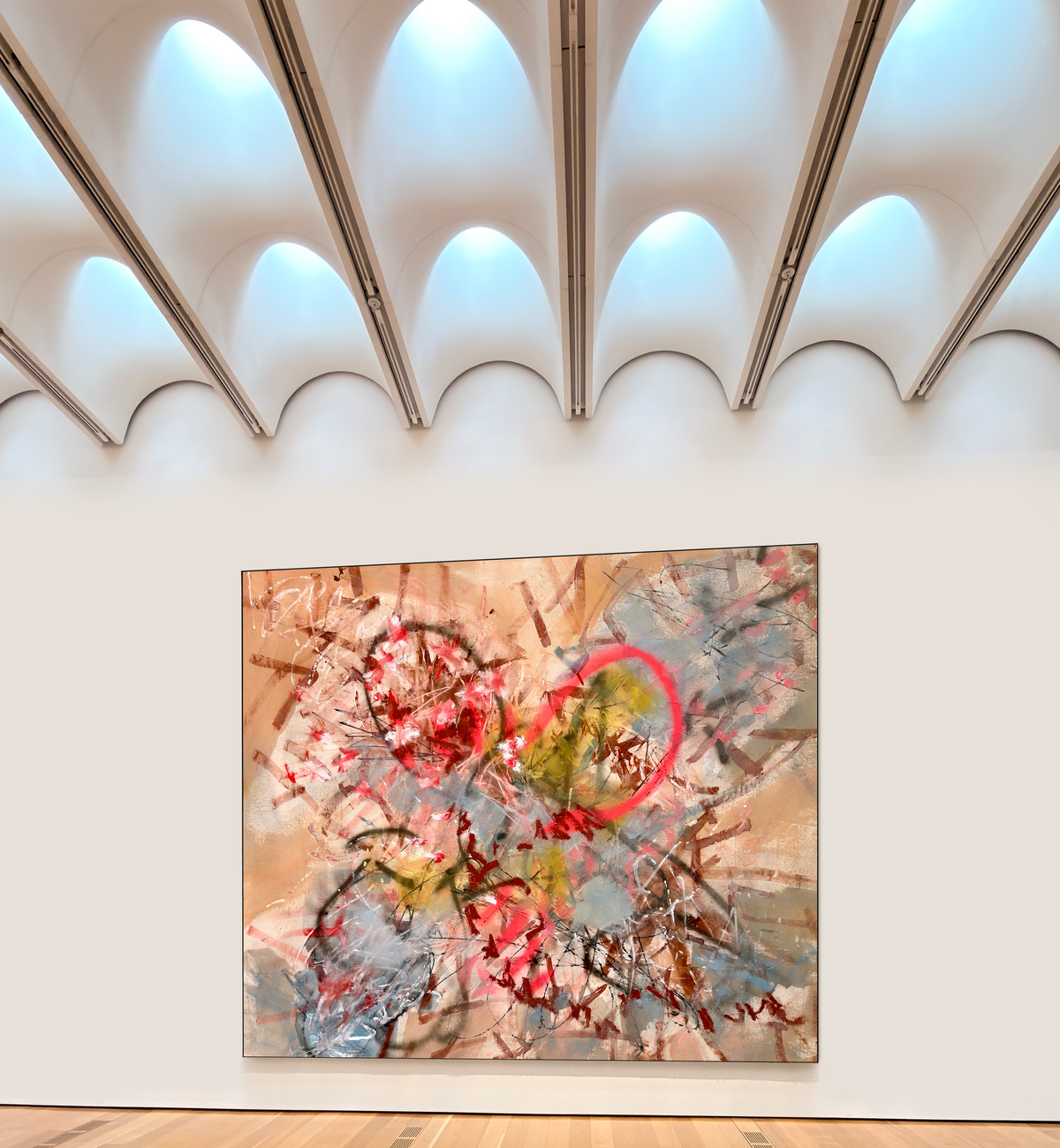
A Painting Keeps Its Worth Where You Actually Keep It
In short: Depreciation describes a manufactured item wearing out through use. An original painting is a one-of-one object that is not consumed by being looked at, so the furniture comparison does not transfer. What an original does have is a resale market, and that market is genuinely unpredictable for any living artist. The honest position is to buy for the decades you will live with the work, protect the purchase with proper documentation, and treat any future resale as unpromised.
A sofa bought new is worth less the moment it leaves the showroom, and less again every year it is sat on. That curve is so familiar it gets applied to everything that arrives in a delivery van. Which is why a reasonable question keeps surfacing among first-time buyers: does an original painting do the same thing?
The short answer is that the curve belongs to a different category of object. The longer answer is more useful, because it explains what actually holds and what genuinely does not.
Why does furniture depreciate, and why doesn't that transfer?
Depreciation describes a manufactured good being consumed by use. The sofa was one of many thousands, its value sat in its function, and the function degrades — springs, foam, fabric, frame. Resale competes against an endless supply of newer identical units.
An original painting fails that description on every count. It is one of one. Its function is not mechanical, so looking at it does not wear it out. And there is no newer identical unit to compete with, because there is no identical unit at all.
This is not a claim that a painting rises in value. It is a narrower and more defensible point: the specific mechanism that makes furniture lose value does not operate here.
So does an original painting appreciate?
Some do. Many do not. Anyone who tells a first-time buyer otherwise is selling something.
The honest version of the art market for a living, working artist is that resale is real but thin and slow, priced by demand that nobody can forecast. For every work that multiplies, there are many that hold roughly flat and some that would sell for less than they cost. That is the truthful range, and it is the same range a careful adviser gives.
Which is why the durable advice keeps arriving in the same shape: buy the work because you want to live with it. If the market later agrees with you, that is a bonus you did not underwrite.
What are you actually buying, then?
Daily use, over a very long horizon.
A painting hung in a room you occupy is used every day for decades, and — unlike almost anything else you spend at that level on — it does not degrade under that use. It also keeps producing something. Lynda Benglis describes what she was after when she started pushing paint off the flat surface: "I had this feeling that I wanted to stretch the image, to have the image confront the viewer rather than have it lie on a surface or a board."
Confront is the right verb. A painting built with real depth does not sit politely behind the furniture — it keeps making a small demand on the room, and on you, for as long as it hangs there. That is the return, and it accrues whether or not anyone ever resells it.
There is a second thing you are buying, which is the record of a decision sequence. Bernard Frize, whose paintings are generated through fixed rules and serial procedures, puts the front end of it simply: "I don't know how to start a painting if I don't have an idea. So, in principle, when I start, I have an idea. I then try to find its realisation through the process of painting."
The realisation is the object. Everything that got decided on the way — where a layer stopped, which passage got covered, what the ground was allowed to show — is still physically in the surface. A mass-produced print carries a picture of a decision. An original carries the decision.
What does a painted surface do that a printed image doesn't?
Worth answering in ordinary language rather than studio language, because homeowners already have the words for it.
In a long-running Houzz discussion — actual people furnishing actual rooms, not marketing copy — the recurring distinction is not price and not rarity. It is that an original is described as having "a soul… connected to it," while a poster "is just an image" that "talks" at you rather than holding "a conversation."
That is a surprisingly precise account of a physical difference. A printed image is uniform: every point of it sits in the same plane, reflects light the same way, and gives you all of itself at once from any distance. A built-up painted surface does not. Thin places let a ground come up. Thick passages hold their own shadow. Two neighbouring colours behave differently at six feet than at six inches. The "conversation" people describe is the object still having something to say on the fortieth pass, which is exactly what a uniform surface cannot do.
Which is also why the depreciation question feels wrong to the people asking it. Something you are still in conversation with has not been used up.
What actually protects the money?
Documentation, condition and access. In that order.
- A signed verso and a certificate of authenticity. Anyone valuing the piece later starts here.
- The original invoice. Provenance in its plainest form: who bought it, from whom, when, for what.
- Photography of the finished work in real light, ideally from the studio rather than your phone.
- Condition. Stable temperature and humidity, out of direct sun, handled by the stretcher sides. A painting kept well for thirty years and one kept badly are not the same asset.
- A reachable artist. A living studio can confirm authorship, supply materials detail, advise on cleaning and speak to a conservator. That is not available for a name on a wall label.
None of that promises a return. All of it removes the reasons a future buyer or insurer would discount the work.
What about insurance?
Original art is usually excluded from, or badly under-covered by, a standard homeowner's policy, which typically caps fine art at a low blanket figure. A scheduled rider on named pieces, supported by the invoice and the certificate, is the ordinary fix. Worth doing once, early, and revisiting when the collection changes.
The reframe worth keeping
The question "will this lose value?" quietly assumes the painting's job is to be sold again. For most of the people asking, that was never the plan. They wanted the piece.
So the better question is the one you can actually answer at the point of purchase: will I want to look at this in twenty years? That has a knowable answer if you look hard enough before buying — a surface with enough in it to keep releasing information, a palette you respond to rather than one that matches a rug, a hand you would recognise again.
Get that right and the object earns out long before anyone asks what it is worth.
Angela Simeone's available original paintings are one-of-one works in oil and mixed media — no editions, no reproductions of the originals. Every finished work ships with a signed verso, a certificate of authenticity and multiple pre-ship videos. For a piece built to a specific room, see commissions.
Related reading
- Original paintings available now
- Commission an original painting
- About Angela Simeone
- Press and published placements
Frequently asked questions
Does an original painting depreciate like furniture?
Not by the same mechanism. Depreciation describes a manufactured item being consumed by use and competing against newer identical units. An original is one-of-one and is not worn out by being looked at. That says nothing about whether it will resell for more — only that the furniture curve does not apply.
Is original art a good investment?
It can be, and it frequently is not. Resale for work by a living artist is real but thin and hard to forecast, and no studio can responsibly promise appreciation. Buy for the decades you will live with the piece, and treat any resale as unpromised.
What documentation should come with an original painting?
A signed verso, a certificate of authenticity, the original invoice, and photography or video of the finished work in real light. That set is what a future buyer, an appraiser and an insurer will all ask for.
Does my homeowner's insurance cover original art?
Usually only up to a low blanket limit for fine art. A scheduled rider listing named works, supported by invoices and certificates, is the standard fix. Check the specific policy rather than assuming; terms vary by insurer and by state.
Do prints hold value better than originals?
They behave differently. An edition's value depends heavily on the edition size and on the artist's market. A one-of-one original has no identical unit competing with it, but also no comparable sales of the same image to price against. Neither is a guaranteed store of value.
See the work
Browse the original paintings currently available, each one of one. Original paintings available now.
Sources
- Artsy, Lynda Benglis interview on reinventing painting
- Ocula, Bernard Frize on the Contradictions of Painting
- Houzz discussion, "For wall art, do you prefer Original paintings or Prints? and Why?"