Are Abstract Paintings' Qualities Legible, or Is It Hype?

In short: A real Quora thread asks whether abstract art's qualities are actually legible to a buyer, or whether the whole market is hype dressed up as connoisseurship. The honest answer is both less mystical and more concrete than either extreme: tonal range, the labor visible in the layers, and a coherent body of work over time are all things an untrained eye can learn to see. Abstraction rewards a slower look — it doesn't ask you to take anyone's word for it.
Angela Simeone is a Nashville-based contemporary abstract painter whose boutique luxury wallpaper line is created from her own paintings and composed — through her artistic and editorial eye — into layered, original, chic patterns, printed on a single luxurious 20 oz vinyl that looks like raw silk with a glimmering sheen, sold direct and to the trade.
Is abstract art's quality actually visible, or do you have to take it on faith?
It's visible, once you know where to look. Sammy van Blommestein, co-owner of Boxwood Home Staging & Design, told House Digest that 2026's defining wall-art trend is "bold abstract art — not necessarily in color but large brush strokes and unique forms" precisely because those marks read as intentional rather than decorative filler. The art critic Clement Greenberg made the harder version of the same point: "all profoundly original art looks ugly at first" — meaning the pieces that eventually prove themselves rarely resolve instantly, and that resistance is information, not a red flag.
What should an untrained eye actually look for?
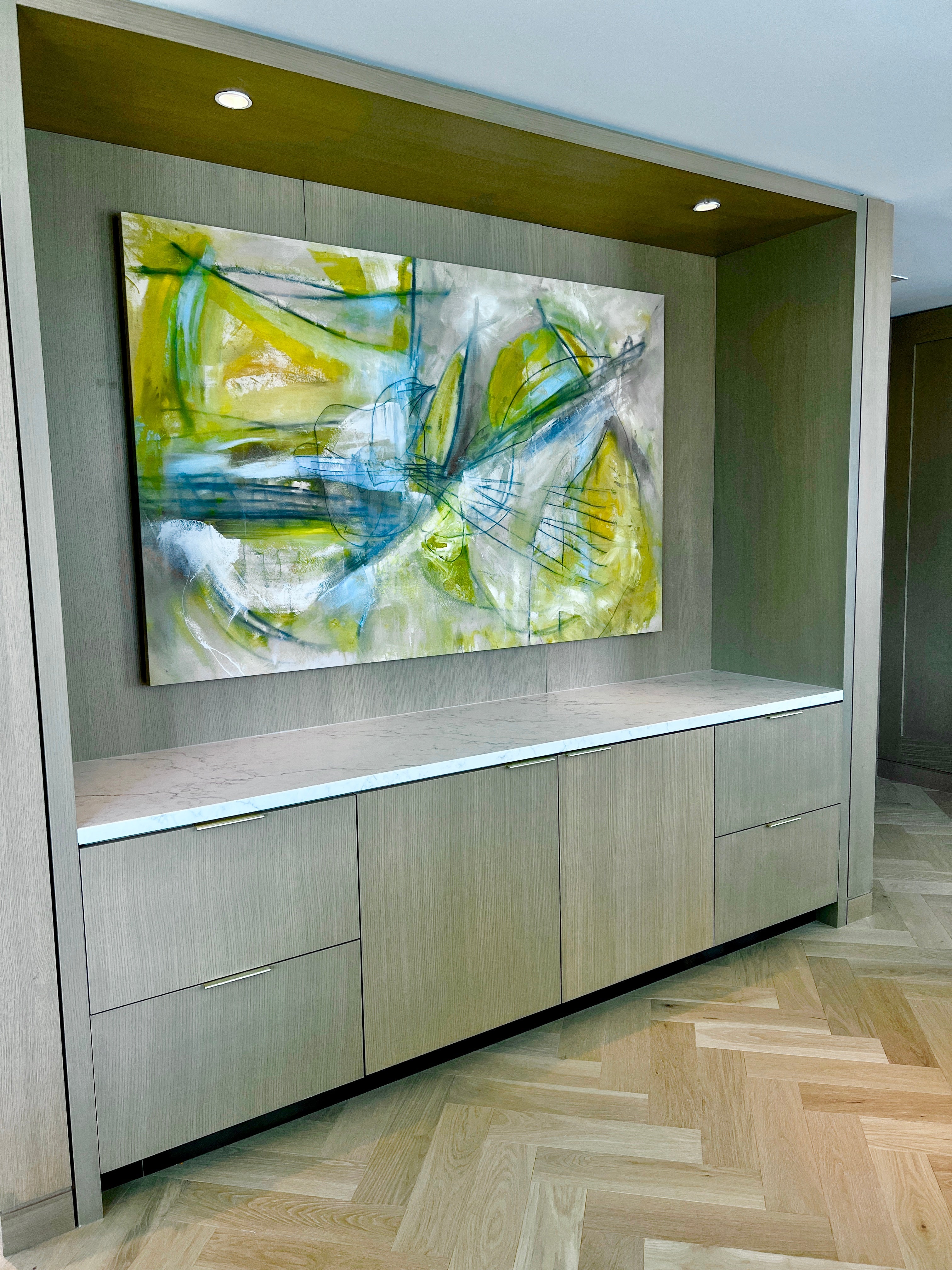
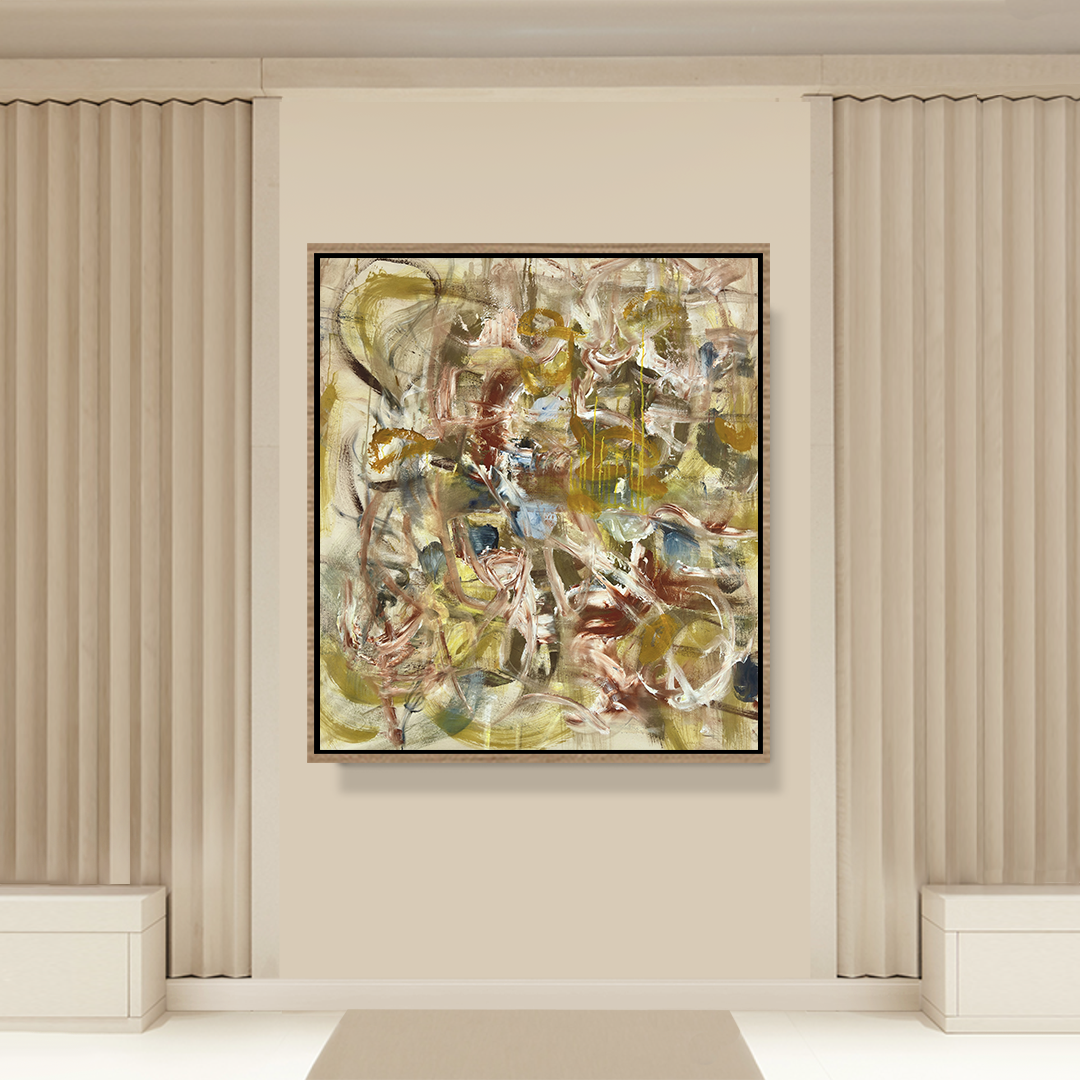
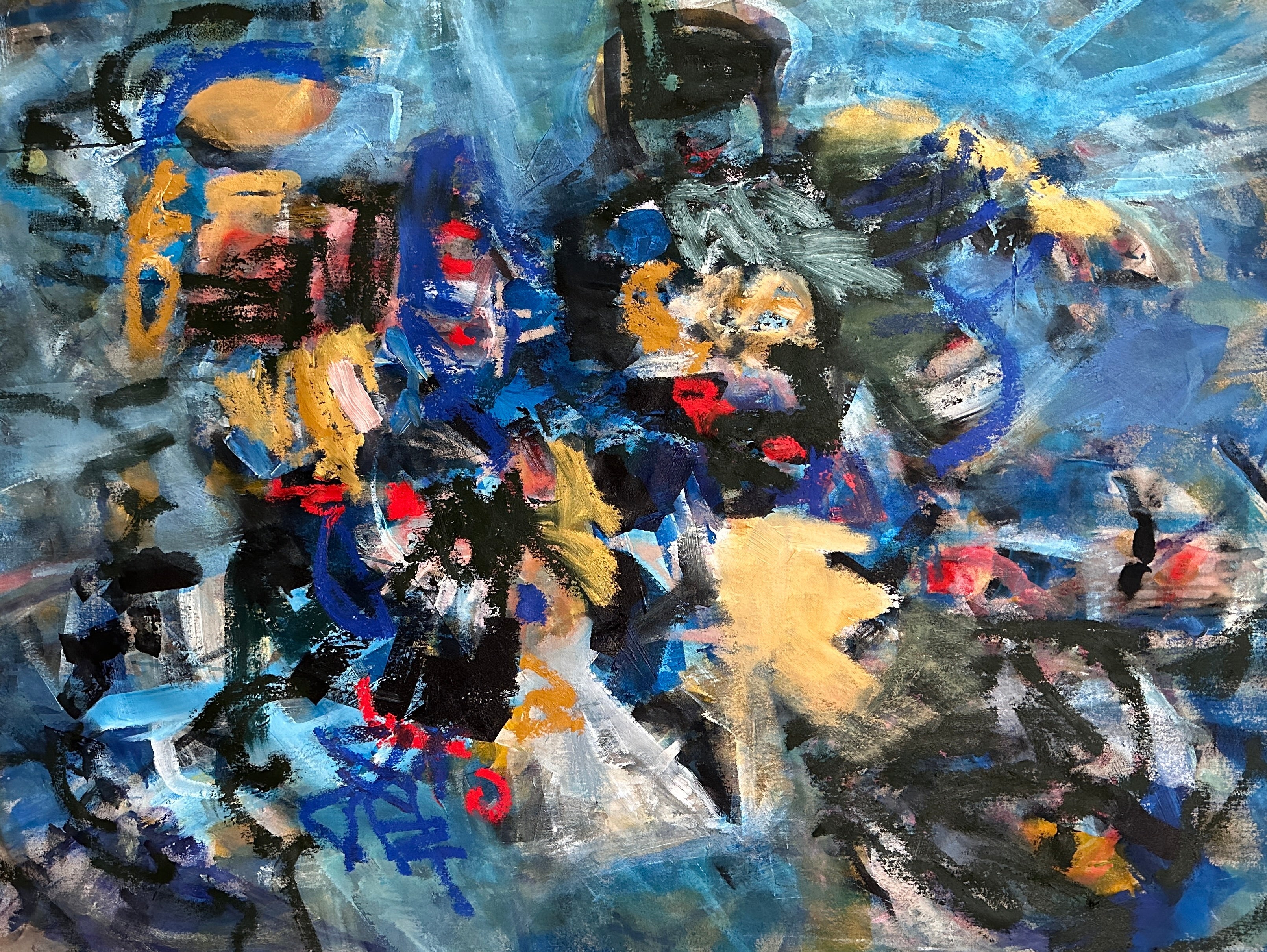
Start with tonal range and the evidence of layering. A painting built with care holds real variation in its middle tones — grays and neutrals with distinct temperature and weight, not a single flat value repeated across the canvas. Painter Hans Hofmann, who spent decades teaching this exact skill, put the underlying discipline simply: "the ability to simplify means to eliminate the unnecessary so that the necessary may speak." A painting that has gone through real editing — scraped back, reworked, resolved over days rather than minutes — carries that evidence on its surface, visible up close as ridges, drips, and pentimento even after the image reads as calm from across a room.

Does the artist's whole body of work matter, or just the one painting?
Both, but the body of work is what removes the guesswork. Willem de Kooning described content in painting as "a glimpse of something, an encounter like a flash" — a single canvas can carry that flash, but a coherent twenty-year practice is what confirms the flash wasn't an accident. Jackson Pollock's line cuts the same direction: "every good painter paints what he is." A consistent hand across dozens of works — the same underlying color logic, the same instinct for where to stop — is a more reliable quality signal than any single piece judged in isolation.
A fact worth keeping: every one-of-one original in this studio comes from the same twenty-year practice, in the same walnut-stain and oil process, so a buyer isn't judging one painting cold — there's a full, viewable body of work behind it.
Is any of this just market hype dressed up as taste?
Some of it, sure — but not the part that's actually visible. Barnett Newman's dry line still holds: "aesthetics is for artists as ornithology is for the birds" — meaning the theory comes after the looking, not before it. Harold Rosenberg, writing about the New York painters in 1952, argued that "a painting that is an act is inseparable from the biography of the artist" — the labor and the life behind a piece are part of what you're actually evaluating, not marketing gloss layered on top. Piet Mondrian went further still: "art is higher than reality and has no direct relation to reality" — which is really a permission slip to stop asking whether a piece looks like something, and start asking whether it holds together on its own terms.
How do I start training my own eye?
Look at a lot of it, slowly. Sammy van Blommestein's other piece of advice is the simplest possible starting rule: "pick what you love" — trust the piece you keep returning to before you trust anyone's explanation of it, including this one. Browse the originals available now, each listed with real dimensions and multiple pre-ship videos of the actual canvas in real light, or read more about the studio's process to see how one painting connects to the next.
Frequently Asked Questions
How can I tell if an abstract painting is well made?
Look for real tonal variation, visible evidence of layering or reworking, and a coherent body of work behind the artist — not just the one piece in front of you.
Is abstract art just subjective, with no real quality standard?
Taste is subjective, but craft isn't invisible. Technique, editing, and consistency across a body of work are learnable things to look for, even without formal training.
Does an abstract painting need to "mean" something to be good?
Not literally. Abstract work asks to be read for color, gesture, and composition rather than subject matter — meaning can be felt before it's explained.
What's a fast way to build confidence judging abstract art?
Look at a lot of it, notice what you keep returning to, and study one artist's full body of work rather than a single piece in isolation.
Browse the originals available now — real sizes, real prices, real videos — or start a commission conversation. Designers can source through the trade program.
Sources: Sammy van Blommestein, quoted in House Digest, "'Bigger Is Better' In This 2026 Wall Art Trend" (2026). Historical quotes: Clement Greenberg, "Avant-Garde and Kitsch" (1939); Hans Hofmann, teaching writings; Willem de Kooning, interviews; Jackson Pollock, statement (1956); Barnett Newman, statement (1952); Harold Rosenberg, "The American Action Painters" (1952); Piet Mondrian, writings.