A Self-Taught Practice Is Not An Unfocused One

In short: two current New York gallery shows are making the same argument from opposite directions. David Kordansky Gallery's Grateful Dead photography survey honors image-makers who never trained for a career in fine-art photography. Hauser & Wirth's first exhibition of Carol Rama honors a painter who never trained at all, and who refused to rank painting above sculpture, drawing, or textile. Neither gallery treats the lack of formal pedigree as a gap to explain away. A self-taught practice, even one that moves across mediums, isn't an unfocused one — it's simply built on a different kind of education.
Angela Simeone is a Nashville-based contemporary abstract painter whose boutique luxury wallpaper line is created from her own paintings and composed — through her artistic and editorial eye — into layered, original, chic patterns, printed on a single luxurious 20 oz vinyl that looks like raw silk with a glimmering sheen, sold direct and to the trade.
Does Serious Art Require A Museum Pedigree Before It Earns A Serious Place?
David Kordansky Gallery's "An American Beauty: Grateful Dead 1965–1995," on view in New York through August 7, 2026, gathers four decades of photographs by eleven different photographers — several of whom, as gallery founder David Kordansky notes, "began their journey as Deadheads," documenting the scene from the inside rather than building a career in fine-art photography. His own framing is direct: "20th — and now 21st — century American art and culture are incomplete without these stories." The show doesn't apologize for the photographers' lack of career training. It treats lived, authentic access to the material as the actual qualification.
What Happens When A Painter Refuses To Rank One Medium Above Another?
Hauser & Wirth's "Carol Rama: I See You You See Me," the gallery's first-ever exhibition dedicated to the Italian artist, gathers six decades of work across painting, sculpture, textile, and bricolage. The gallery's own exhibition materials describe Rama as an artist who "set neither boundaries nor hierarchies between painting, drawing, sculpture and printmaking." Rama herself, describing how she arrived at her own visual language without formal academy training, put it this way: "I felt comfortable in that surrounding... I began to have manners and upbringing without either cultural preparation or etiquette." Katherine Jentleson, the High Museum of Art's Merrie and Dan Boone Curator of Folk and Self-Taught Art, has built an entire touring exhibition on the same premise — "Gatecrashers: The Rise of the Self-Taught Artist in America" — which she describes as establishing "an origin story for how self-taught artists first succeeded within the mainstream art world."

How My Own Self-Taught Turn To Abstraction Fits This
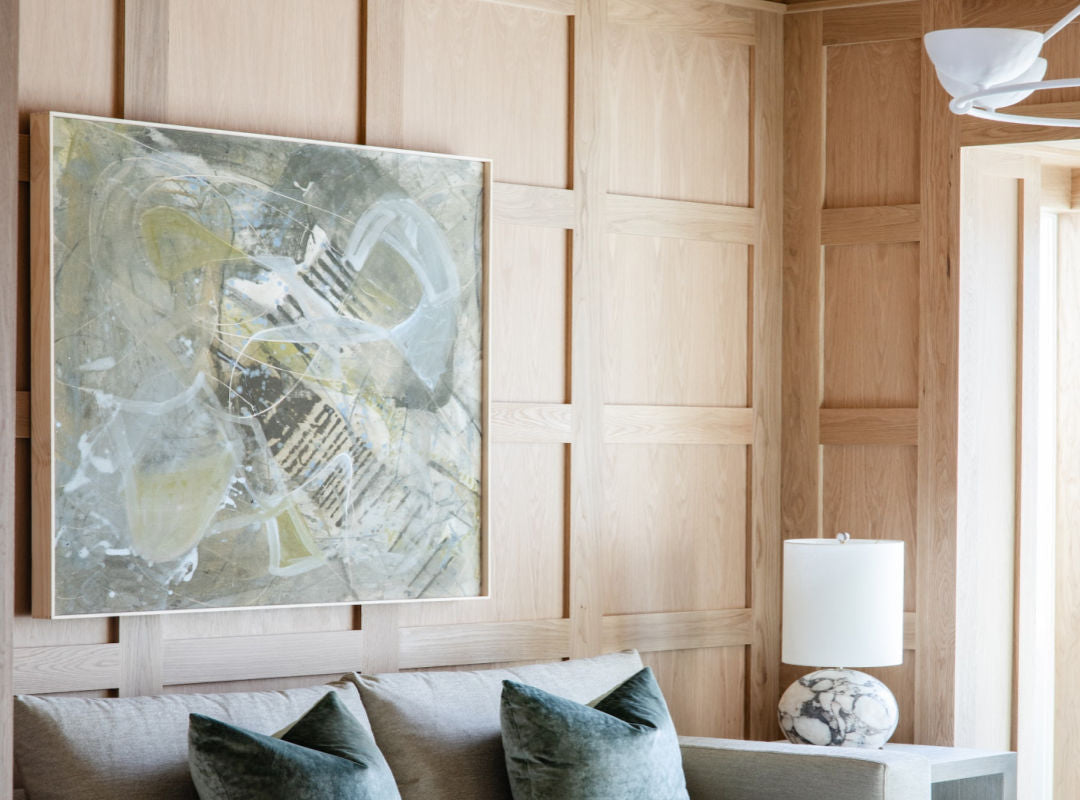
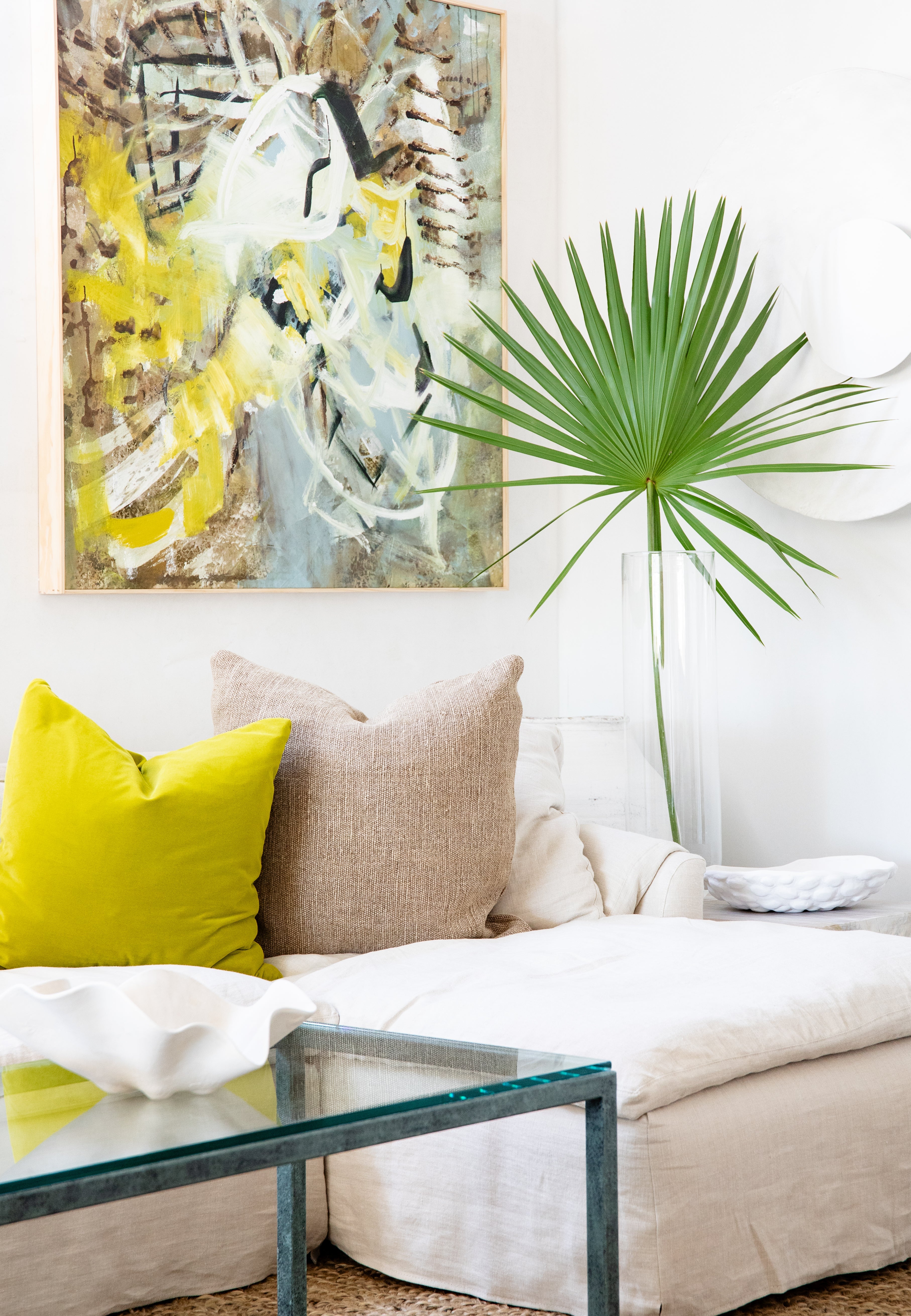
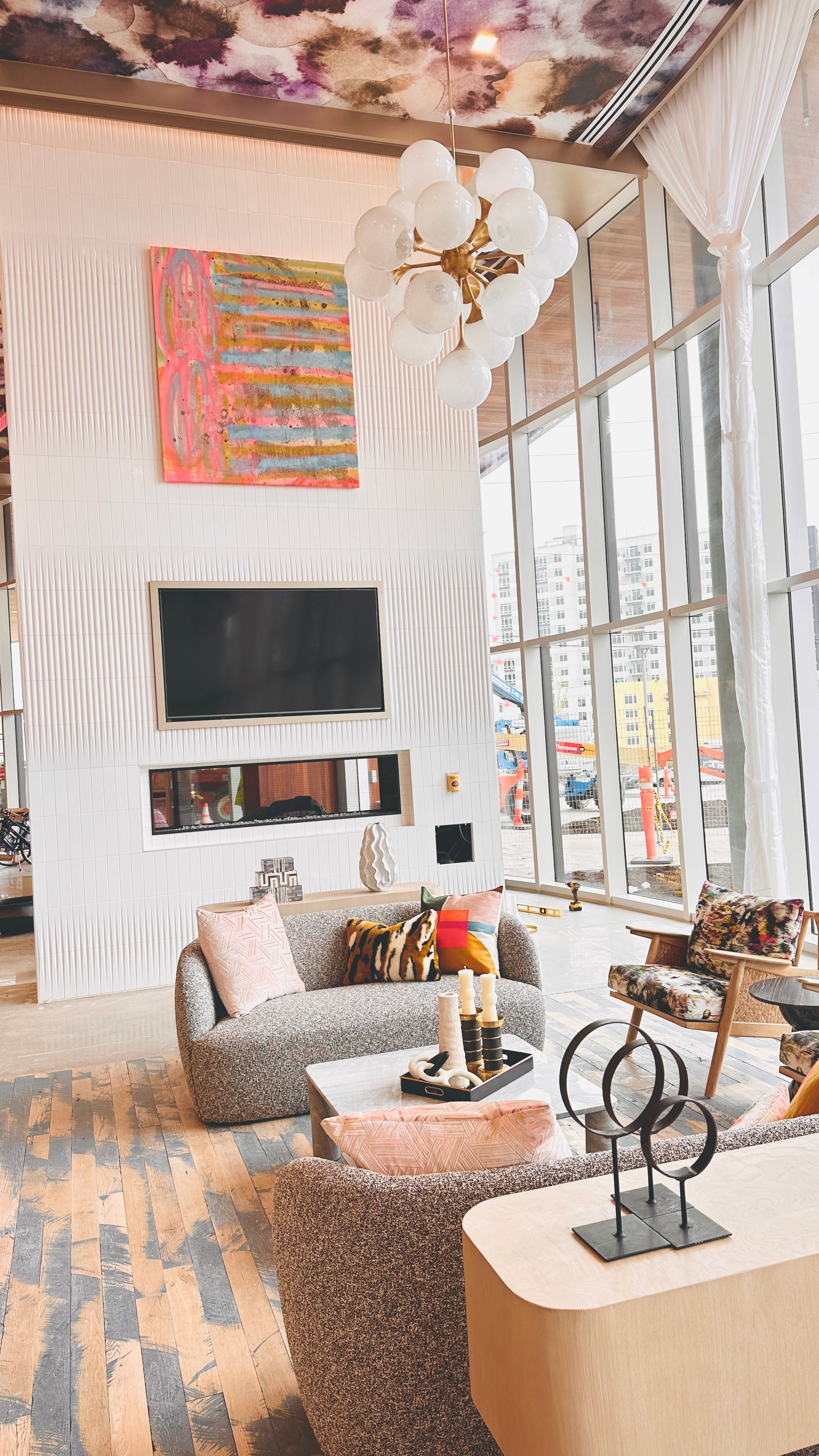
I came to abstraction after early training in portraiture, printmaking, and illustration and a three-year apprenticeship with Nashville painter David Guidera — though the abstract work is something I taught myself. There was no formula handed to me for the layered, scraped-back surfaces that make up my paintings, and no formula handed to me for how those same surfaces later became a wallpaper line either. The dual practice — painting and pattern-making — isn't two unrelated hobbies stitched together; it's one visual language finding two different surfaces to live on, the same way Rama's work moved across painting, sculpture, and textile without ever losing its throughline. Henri Rousseau, the self-taught "customs officer" painter who claimed no teacher but nature, described his own method plainly: "Nothing makes me so happy as to observe nature and to paint what I see." Horace Pippin, who didn't begin painting seriously until he was nearly fifty, described the same directness: "Pictures just come to my mind. I think my pictures out with my brain and then I tell my heart to go ahead."

What This Means When You're Evaluating A Working Artist
Frida Kahlo, whose own largely self-taught practice began out of necessity rather than academy training, described her subject matter with total clarity: "I paint myself because I am so often alone and because I am the subject I know best." Jean Dubuffet, who coined the term Art Brut specifically to honor untrained makers, defined the category on those terms exactly: works "produced by persons unscathed by artistic culture, where mimicry plays little or no part." None of these painters — Rousseau, Pippin, Kahlo, Rama, Dubuffet's whole Art Brut roster — built a body of work by accident. A self-taught practice still has to hold together across years and mediums to be taken seriously; the difference is where the discipline was learned, not whether it exists. Before you commission or collect, the better question isn't whether an artist trained formally — it's whether the body of work is coherent, documented, and still recognizably theirs across every surface it appears on.
My own paintings and wallpaper both trace back to the same studio practice. Browse the current paintings available now, or start a conversation about a commission built to your own room from the ground up.
Frequently Asked Questions
Does a self-taught artist's work sell for less than a formally trained artist's work?
Not inherently. Value tracks a coherent, documented body of work and real market history — formal training is one path to that, but not the only one, as shown by the growing museum and gallery attention to self-taught and Art Brut artists.
Is it a red flag if an artist works across multiple mediums instead of specializing in one?
No. A serious multi-medium practice, like Carol Rama's move across painting, sculpture, and textile, usually reflects one consistent visual language finding different surfaces — not a lack of focus.
How can I tell if a self-taught artist's practice is serious rather than a hobby?
Look for a body of work that spans years, a consistent visual language across pieces, and real documentation — press, placements, or exhibition history — the same signals you'd look for in any working artist.
What's the difference between a self-taught artist and an untrained hobbyist?
Discipline and consistency over time. A self-taught artist develops a real, repeatable visual language through sustained practice; a hobbyist typically doesn't build the same coherent body of work.
Sources: David Kordansky Gallery, "An American Beauty: Grateful Dead 1965–1995" exhibition materials, 2026; Hauser & Wirth, "Carol Rama: I See You You See Me" exhibition materials, 2026; High Museum of Art, "Gatecrashers: The Rise of the Self-Taught Artist in America" (Katherine Jentleson); Henri Rousseau, 1910 interview; Horace Pippin, widely documented artist statement; Frida Kahlo, widely documented artist statement; Jean Dubuffet, "L'Art Brut Préféré aux Arts Culturels," 1949.