A Hotel's Art Collection Is A Relationship, Not A Purchase

In short: A hotel's art program works best as an ongoing relationship with a working artist, not a single decorating decision. Properties are increasingly hiring dedicated art directors and building real, repeat relationships with regional painters — the same model behind Angela Simeone's 33-original placement at the Conrad Nashville, designed by Champalimaud Design. For designers and hospitality groups sourcing large-scale original art, going straight to an artist with an established commercial track record removes the guesswork.
Angela Simeone is a Nashville-based contemporary abstract painter whose boutique luxury wallpaper line is created from her own paintings and composed — through her artistic and editorial eye — into layered, original, chic patterns, printed on a single luxurious 20 oz vinyl that looks like raw silk with a glimmering sheen, sold direct and to the trade.
Is a hotel's art collection really about curating pieces to hang, or about the relationship behind it?
Increasingly, it's about the relationship. San Diego hospitality group Oram Hotels — which operates the Granger Hotel and The Guild — recently appointed art advisor and curator Jennifer Findley as its first-ever Director of Arts & Culture, a dedicated ongoing role built around a cross-border arts initiative and an artist-in-residence program developed with UC San Diego's Stuart Collection. That's a real structural shift: not a single art-buying decision made once during a renovation, but a standing position built to keep an actual relationship with working artists going.
It's the same model behind the Conrad Nashville's collection. I'm the most-placed artist in the hotel, with 33 originals across the private suites, the public and gallery areas, and both of its dining rooms — Blue Aster and Thistle & Rye. The interiors were designed by Champalimaud Design, the New York firm behind properties like The Plaza and the Emirates Palace Mandarin Oriental. Kajsa Krause, Principal and Director of Strategy at Champalimaud, described their approach to a recent hotel redesign this way: "This design narrative brings to life a romantic and bespoke, sophisticated yet understated residential sensibility. There is a major focus on craftsmanship and precision. It is luxurious in every aspect, from the broad concept to the mood of the lighting and the tactility of the materials." Art isn't an afterthought dropped into a finished room in that kind of process — it's planned into the interiors from the start.
Why does thoughtfully placed original art actually matter to a hotel's business, not just its look?
Because guests notice, and it changes how a space performs. Judith Tatar, founder of Tatar Art Projects — the hospitality art consultant behind collections at properties from Waldorf Astoria to Rosewood — put it directly: "Art isn't an accessory. It defines how a guest experiences a space. The right piece can energize a lobby, spark curiosity in a hallway, or make a room feel unforgettable." Tatar has also described the deeper integration this requires: "When art becomes inseparable from architecture, it doesn't just elevate a space visually — it activates it, engages visitors, and creates lasting impressions."

That integration is exactly what Sol LeWitt described in his own writing on public and architectural art: "As soon as one does work on walls, the idea of using the whole wall follows. It means that the art is intimately involved with the architecture." A single statement piece in a lobby, sized and placed at the design stage rather than added afterward, does work a generic decorative print simply can't — it gives a space a specific identity a guest can name, even if they can't say exactly why the room feels considered.
What should a designer or hospitality group actually look for when sourcing large-scale original art?
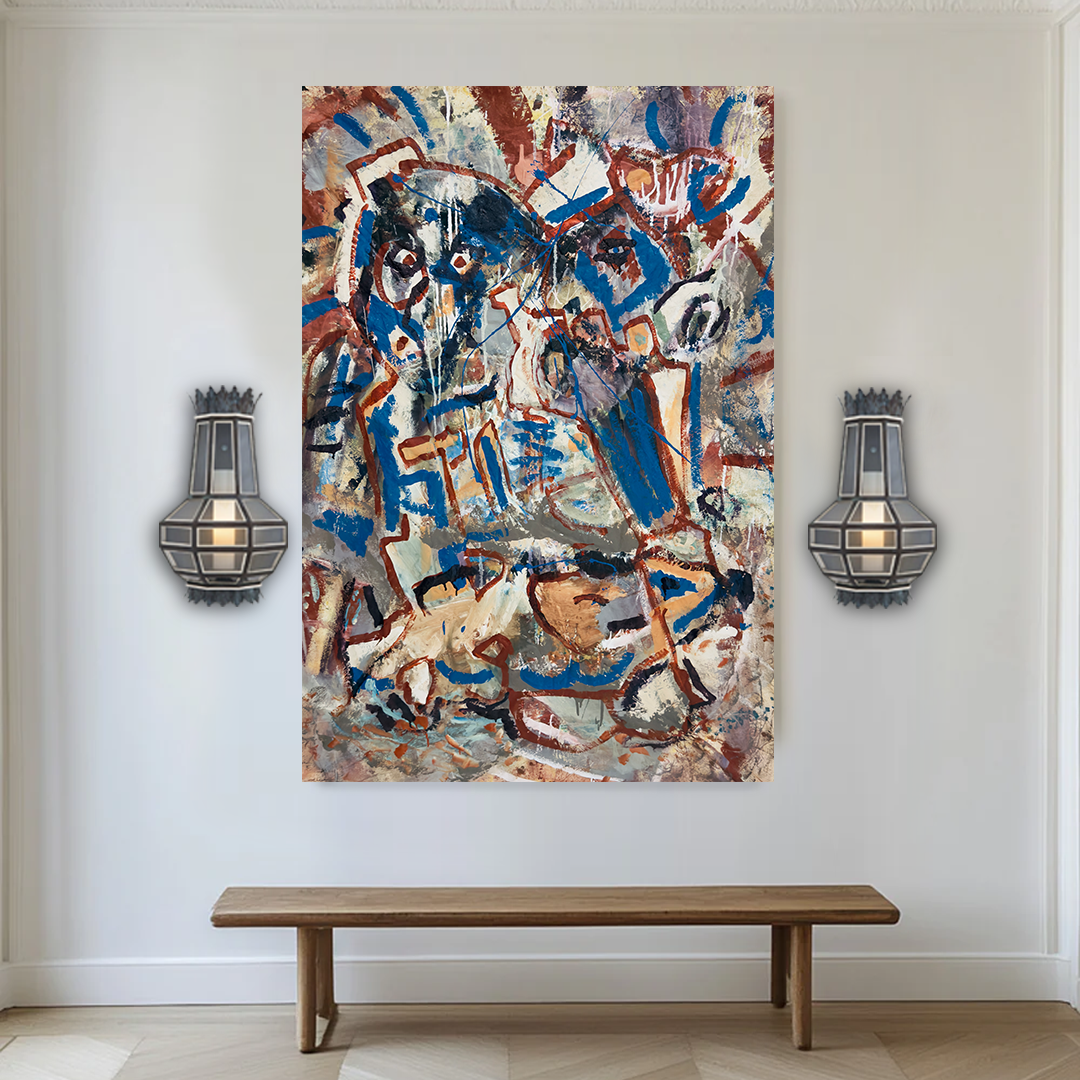
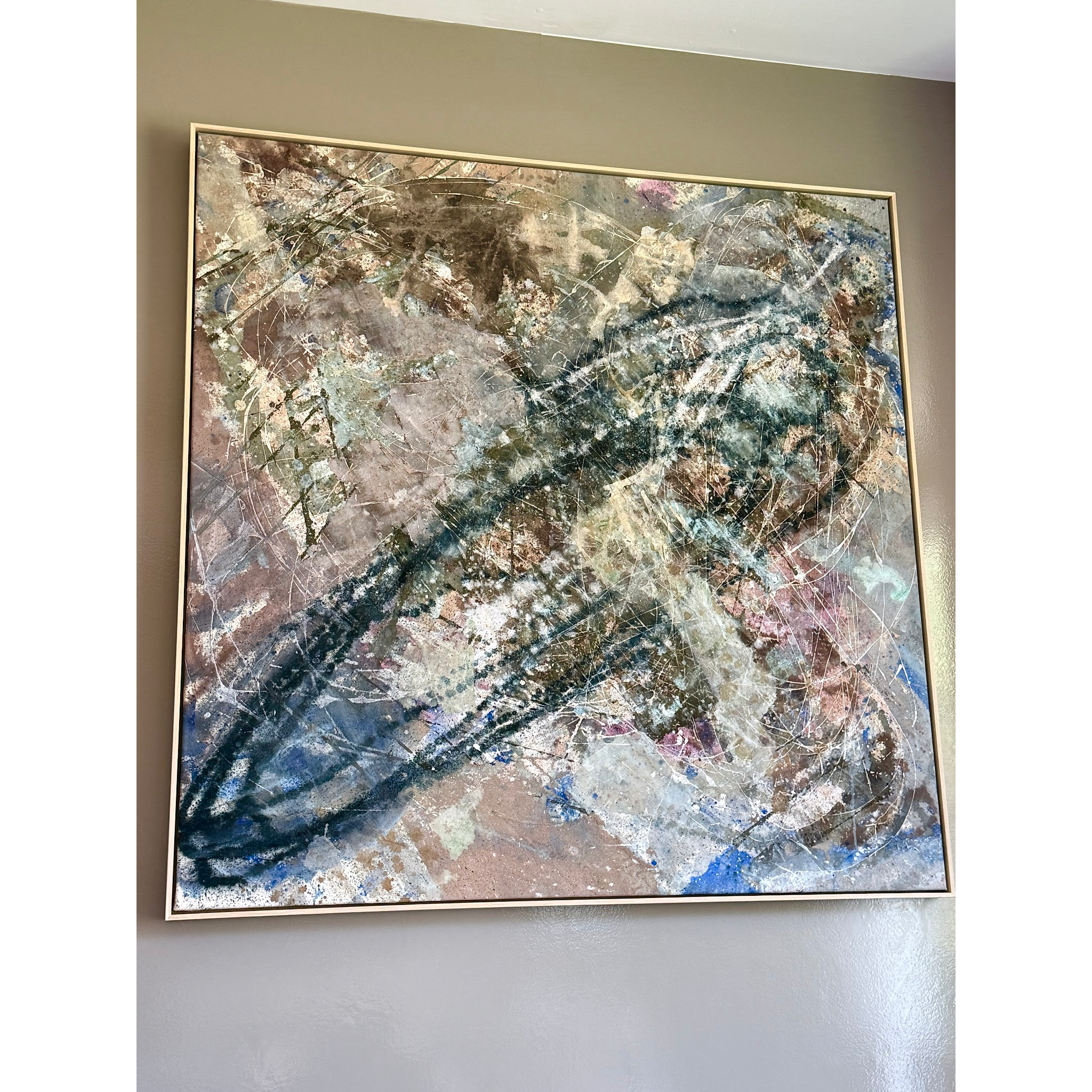
Look for an artist with a real, documented commercial track record — not just gallery representation. My placements include Blackberry Mountain (Relais & Châteaux, Walland TN), the Frist Clinic, Sarah Cannon Cancer Center, and a licensed reproduction in the Grand Hyatt Nashville lobby, alongside the Conrad Nashville project. That history matters because commercial and hospitality projects have different demands than a residential sale: firm timelines, specific dimensions, install logistics, and a willingness to work at a scale that suits a lobby or a multi-panel wall rather than a single domestic room. Large-scale painting is composed differently for exactly this reason — worked in the round, from all four sides, built to hold a room's attention without a single focal point, the kind of piece a hotel lobby or a commercial project actually needs to anchor a space with a story to tell.
John Ruskin made the case for why this kind of art matters to a place at all, writing that "great nations write their autobiographies in three manuscripts: the book of their deeds, the book of their words, and the book of their art." A hotel's art collection is the version of that autobiography guests actually walk through. Getting it right takes an artist who treats the relationship as ongoing, not a single transaction.
If you're a designer or hospitality group sourcing original art for a commercial project, my hospitality and commercial art page covers scale, timeline, and licensing options, and I take on commissions built around a project's specific dimensions and palette. My current in-stock originals are also available to view for projects on a shorter timeline.
Frequently Asked Questions
How long does a commercial or hospitality art commission typically take?
Roughly four weeks from deposit to delivery for a single large-scale piece, though multi-panel or multi-room projects planned alongside interior design take longer and should be scoped early with the design team.
Do hospitality projects get different pricing than a residential purchase?
Trade and hospitality projects typically work through a trade pricing structure, and licensing a reproduction for multiple rooms or locations is available as a separate option from selling an original.
Should a designer pick the art before or after the interiors are finalized?
Before, whenever possible. The strongest hospitality placements — like the Conrad Nashville's collection — are planned into the interiors from the start rather than sourced to fill an empty wall at the end.
Does a hotel need an in-house art director to do this well?
No — a dedicated role helps at large, art-forward properties, but a designer or ownership group can build the same kind of ongoing relationship directly with a working artist on a project-by-project basis.
Sources: Hospitality Net, "Jennifer Findley has been appointed as Director of Arts & Culture at Oram Hotels," 2026 · Vicky Doe, "Champalimaud Design unveils opulent Abu Dhabi creation," Hospitality Interiors, July 17, 2023 (Kajsa Krause) · Daniel Scheffler, "Why Art Is The Secret Ingredient Behind Memorable Hotel Experiences," Forbes, September 27, 2025 (Judith Tatar) · Sol LeWitt, documented artist writings on wall drawings and public art, Wikiquote · John Ruskin, "The Stones of Venice," 1853.