Wrapping a Room in One Pattern Does What a Mural Promises

In short
Immersive is a budget question disguised as an aesthetic one. Hospitality designers naming "immersive art" as a 2026 movement are describing an atmospheric effect, not a medium — and a pattern carried across every surface of a room delivers that effect at a fraction of a commissioned installation's cost and lead time. What makes it read as art rather than as covering is where the pattern came from and how far it is carried.
What is actually driving immersive rooms in 2026?
Designers running out of patience with the accent wall.
The wallcovering conversation has moved from which wall to how far. Pattern is being carried across walls and onto ceilings so a room reads as one composition rather than as a feature and three neutrals. Trade coverage of 2026 hospitality design names immersive art alongside reinvented Art Deco and sustainable materials among the movements set to define the year, with fabrics and wallcoverings framed as the elements that shape a property's atmosphere, comfort and identity.
Kelsey Matyas of Kelsey Deirdre Designs makes the case for the ceiling as a matter of rigour rather than drama: "Wallpapering overhead is about embracing every surface in a room, ensuring no detail is missed, and every angle feels considered." Nothing is left unaddressed — which is a fair working definition of immersive before anyone reaches for the word.
Does immersive mean museum-grade art on the wall?
No, and the designers using the effect are clear about that.
Tobe Morrow of Morrow & Co. puts scenic panels near the top of the current repertoire: "Scenic wallpaper panels are one of my favorite design moments right now. They add instant depth, artistry, and soul to a space." Depth, artistry and soul are the exact deliverables a commissioned installation is bought for, and Morrow is describing a wallcovering achieving them.
Meghan Jay goes further and names the category shift directly. Framing a pattern inside existing panelling, she says, "feels intentional and tailored" — and the result behaves "more like decorative millwork or a piece of art than traditional wallcovering." The treatment changes what the material is in the room. A pattern carried edge to edge and framed by architecture stops reading as a surface finish.
What separates a pattern that reads as art from one that reads as covering?
Dimension, and where the pattern started.
Sasha Bikoff identifies the move away from flat print as the defining shift: patterns now read "almost like textiles on the wall. Think grasscloths with metallic threads or hand-painted looks that have incredible depth." The word doing the work there is depth — whether the surface has anything happening below its top layer.
Yena Jung of By Yena Designs points at the same quality from the practical end, describing pattern set inside built-in joinery as "the perfect way to add a pop of color or pattern and create texture on a wall." Texture, again, rather than image. And Maggie Goodrich of Third Street Architecture adds the detail that makes an immersive treatment hold together rather than float: for 2026, she says, "you will be seeing more fun wallpapers with trim painted a coordinating color." Carrying the pattern's own colour onto the joinery is what closes the room.
Where does this studio's pattern actually come from?
An original painting, and that origin is the honest claim.
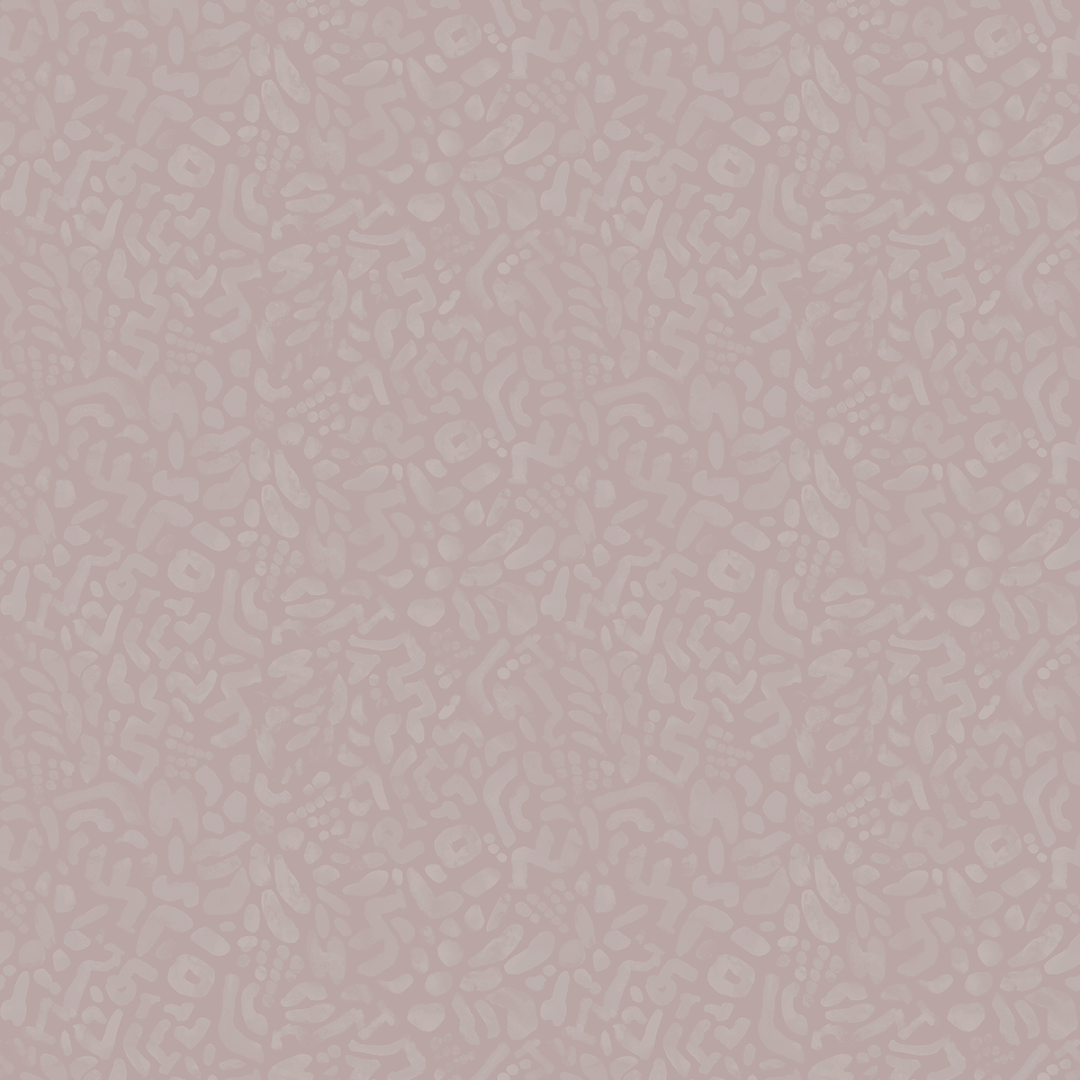
Every pattern in this line begins as a passage of mark-making inside one of Angela Simeone's original oil and mixed-media paintings — a real hand-made source, photographed and developed into a repeat. The wall that results is singular: evocative, rich and deep. The wallpaper itself is printed by a manufacturer onto vinyl. It is not hand-painted, and it is never described that way here. A hand-painted original becomes a printed pattern is the accurate sentence, and it is the more interesting one.
The substrate supports the immersive treatment rather than fighting it. The line is 20 oz Type II commercial-grade vinyl — an embossed face with a slight strié shimmer over a laminated fabric backing, which is what gives the surface something happening under the pattern in raking light. Rolls run 24 inches wide, pre-trimmed and unpasted, with 52-inch widths for commercial specification. It is made print-on-demand in about two weeks.
Currently live patterns include the Flourish family in five colourways, Freesia in Sand and Goldenrod, Atelier in Blue Haze, Golden Sky and Berry Silvered Champagne, Chic Stripe in Winter White and Winter Grey Sage, Toile in Medium Sky Blue, and Deco in Black and Cigar.
How do you test an immersive scheme before committing a whole room to it?
Cheaply, and before the drawing set closes.
Samples are five dollars each, and the trade programme includes up to five free. Yardage is fifty-five dollars a yard with a thirty-yard minimum, which is roughly the point at which a full small room — walls, ceiling and all — becomes a real line on a budget rather than a hypothetical. Custom colourways and scale adjustments are available to the trade, alongside 20% trade pricing for verified designers and firms.
The sequencing advice from the commercial side applies here as much as it does to original art: specify before the finish selections lock, not after construction is complete. A pattern chosen early can have its colourway tuned to the casework. A pattern chosen late has to survive whatever the casework already is.
What the pattern makers understood before any of us
Mariano Fortuny spent his Venice career running hand-drawn and stencilled sources through presses of his own design, and never pretended the printed cloth was the drawing. The value was in the origin of the mark and the fidelity of the transfer, which is the same two-part claim any honest artist-designed wallcovering makes today.
And Josef Hoffmann's Wiener Werkstätte worked from the premise that a room is a single designed object rather than a container for separately chosen things — walls, ceiling, furniture and fittings resolved together. Wrapping a room in one pattern is not a new idea chasing a hashtag. It is one of the oldest ideas in the discipline, arriving back with better printing behind it.
Frequently asked questions
Does an immersive room require a commissioned art installation?
No. Designers are producing immersive effects with wallcovering carried across walls and ceilings, framed by architecture. Tobe Morrow of Morrow & Co. describes scenic panels as adding "instant depth, artistry, and soul to a space" — the same deliverables a commissioned installation is specified for, at a fraction of the cost and lead time.
Is artist-designed wallpaper suitable for hotels and commercial projects?
Yes. This line is 20 oz Type II commercial-grade vinyl with a laminated fabric backing, available in 52-inch widths for commercial specification alongside the standard 24-inch residential roll. Custom colourways and scale are available to the trade.
How much wallcovering does a fully immersive small room take?
Enough that the 30-yard minimum stops being theoretical. Yardage is $55 per yard, samples are $5 each with up to five free on the trade programme, and print-on-demand production runs about two weeks — so a scheme can be tested at sample cost well before the specification is committed.
Sources and further reading
- https://angelasimeone.com/collections/all-wallpaper-patterns-by-angela-simeone
- https://angelasimeone.com/pages/trade-program
- https://angelasimeone.com/pages/art-for-hospitality-commercial-projects
- https://angelasimeone.com/pages/angela-simeone
- Good Housekeeping, Monique Valeris — designers on 2026 wallpaper treatment
- Hospitality Interiors, 2026 trend coverage naming immersive art among the movements set to dominate hospitality design