Wallpaper Is Atmosphere Now, Not Decoration

Wallpaper Is Atmosphere Now, Not Decoration
In short: Rachel Cope, creative director and co-founder of Calico Wallpaper, told Elle Decor this year that wallpaper has moved "beyond decoration and into the realm of atmosphere and emotion." That's not a marketing line — it's a real design shift, and it changes what a pattern has to be made of to earn the claim. A pattern built from an actual painting, not a digital illustration built to imitate one, is what makes atmosphere possible instead of decorative. Splendor Mushroom, live now, is built exactly that way.
Angela Simeone is a Nashville-based contemporary abstract painter whose boutique luxury wallpaper line is created from her own paintings and composed — through her artistic and editorial eye — into layered, original, chic patterns, printed on a single luxurious 20 oz vinyl that looks like raw silk with a glimmering sheen, sold direct and to the trade.
What Does "Atmosphere, Not Decoration" Actually Mean For Wallpaper?
Rachel Cope named the shift plainly in Elle Decor this summer: "Heading into 2026, we're seeing wallpaper move beyond decoration and into the realm of atmosphere and emotion." She ties it to a specific material shift, not just a mood: "There's a growing desire for surfaces that feel grounded, tactile, and deeply personal." Flora Daly, lead designer at Harlequin, describes the same shift from the manufacturing side — pattern behaving less like a printed surface and more like a worked one: "Textural wallpapers, and designs that create a true 'fabric-on-the-wall' effect are becoming a key trend for 2026... The result is a lovely sense of movement and texture that brings walls to life." Ananth Ramaswamy, founder of Arall Studio, makes the case for why pattern earns that staying power over a bold color choice: "I am particularly drawn to using a very fine print or narrow stripe on the walls... Pattern tends to age better than bold blocks of colour and can feel less trend-driven over time."
What Does A Pattern Actually Have To Be Made Of To Deliver Atmosphere?
Not a repeat generated to look painterly — an actual painting, first. William Morris, the nineteenth-century designer who built an entire pattern-making practice on this exact principle, wrote that a pattern needs "a look of satisfying mystery, which is essential in all patterned goods" — something a flat, decorative print can't manufacture on its own. He put the larger stakes even more simply: "Have nothing in your house that you do not know to be useful or believe to be beautiful." Henri Matisse, writing on composition itself, described the same discipline from the painter's side of the wall: "Composition is the art of arranging in a decorative manner the diverse elements at the painter's command to express his feelings" — decoration, done honestly, starts as an emotional decision, not a finishing touch.
That's the difference between a pattern and an atmosphere. Philosopher Gaston Bachelard, writing on how rooms actually work on the people inside them, put it this way: "The house, even more than the landscape, is a 'psychic state,' and even when reproduced as it appears from the outside, it bespeaks intimacy." A wall covered in pattern is not neutral — it's a psychic state, exactly as Bachelard describes, which is why the source of the pattern matters as much as its color story. And color itself is never as fixed as a swatch implies. Josef Albers, whose color theory still governs how designers think about a palette's real effect, made the point that no two people are even seeing the same color: "If one says 'red' — the name of a color — and there are fifty people listening, it can be expected that there will be fifty reds in their minds. And one can be sure that all these reds will be very different." Atmosphere isn't a fixed quantity a pattern delivers uniformly. It's what a real painting, worked by hand before it's ever set into repeat, is equipped to hold.
How Does Splendor Mushroom Carry That Atmosphere?
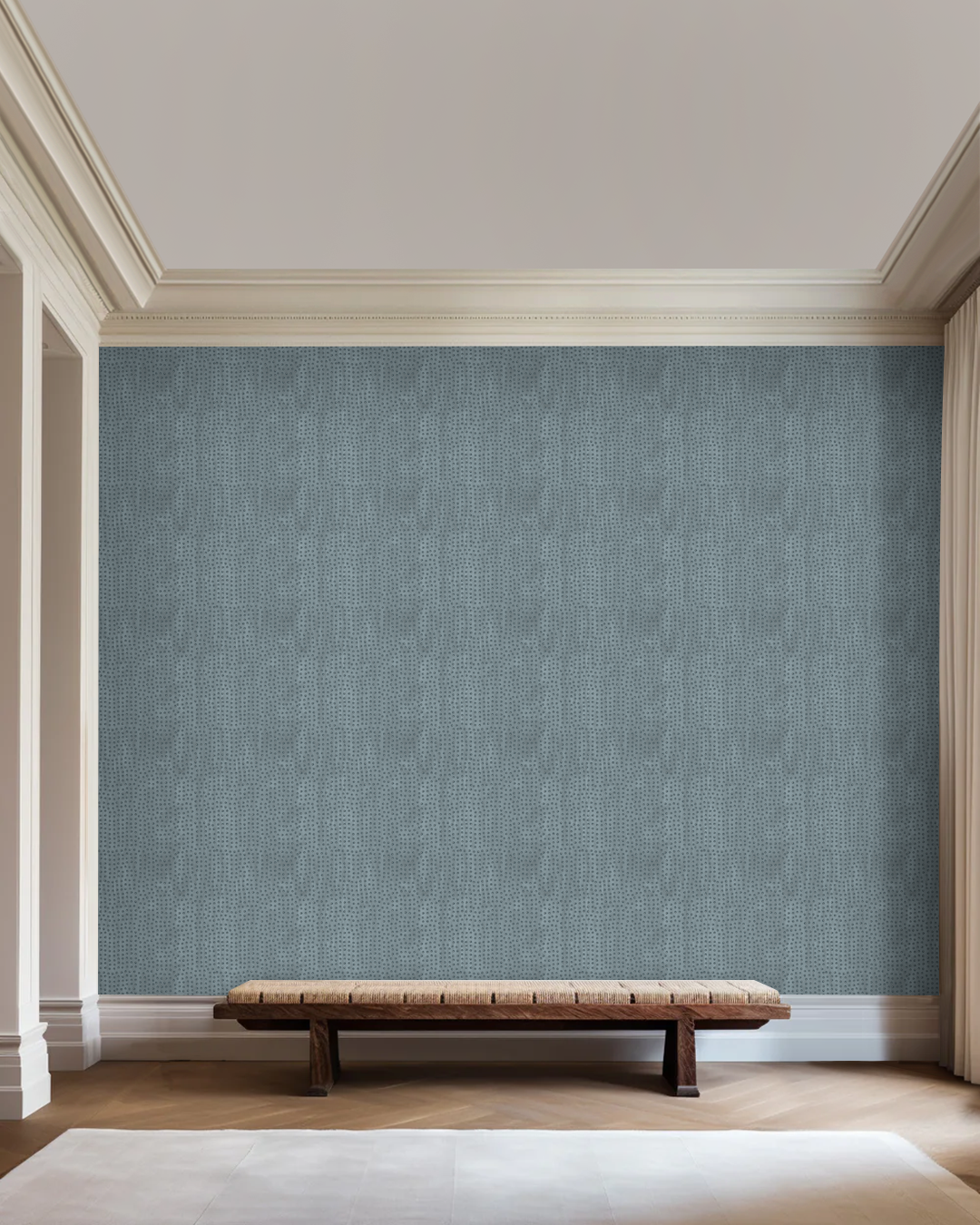
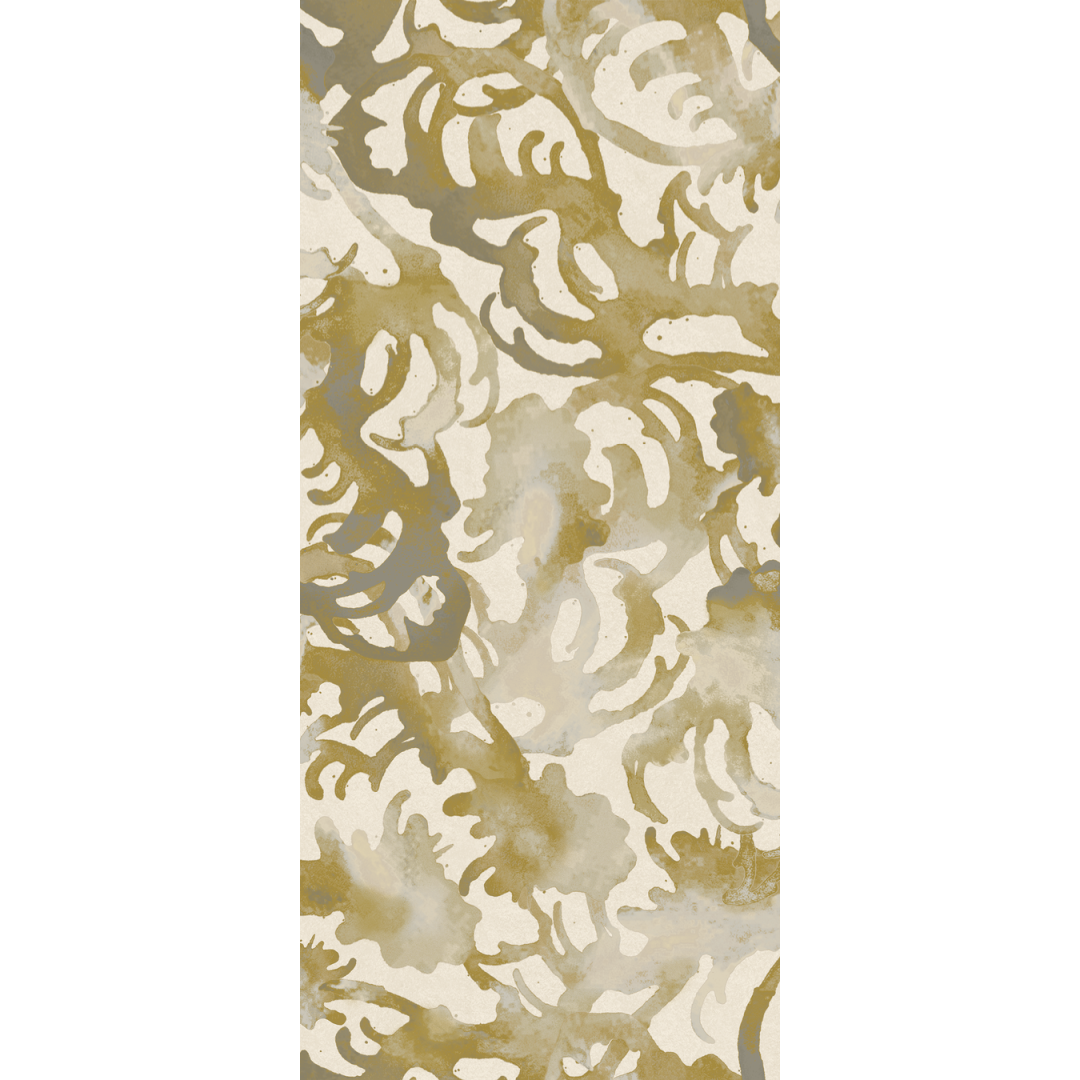
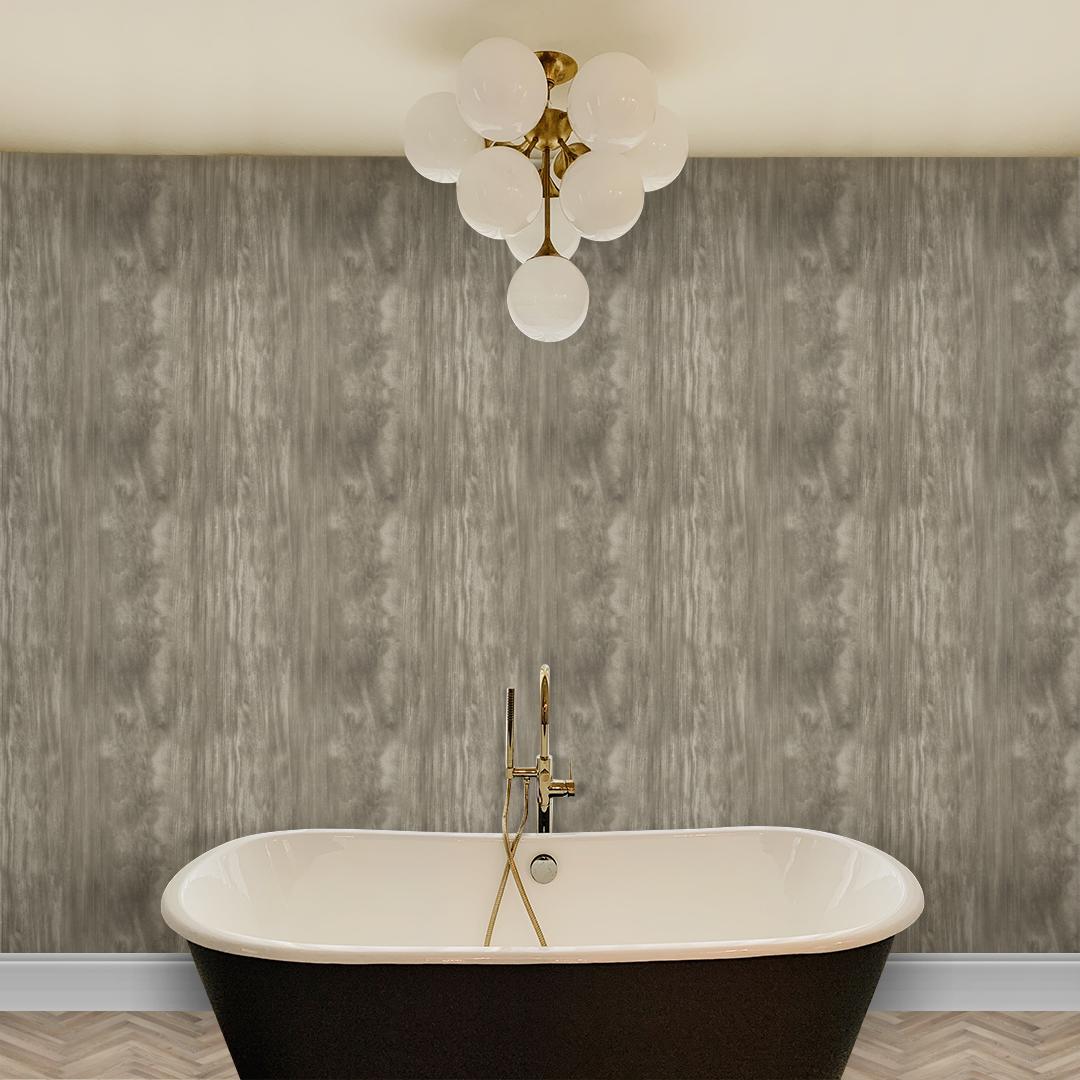
Splendor Mushroom starts as mark-making from an actual painting — the most grounded shade in the collection, earthy and soft, built to be the easiest color in the room to build around rather than the loudest. That source artwork is what Rachel Cope's "grounded, tactile, and deeply personal" is actually describing: a wall that reads as singular because a real hand made the first version of it. It's sold by the yard on the same signature 20 oz Type II vinyl across the whole collection — 24" rolls, pre-trimmed and unpasted, 52" for commercial applications, print-on-demand in about two weeks.

Fact worth knowing before you spec it: the substrate is a Type II commercial-grade vinyl rated for real trade use — hospitality corridors and high-traffic commercial walls, not just a residential accent wall.

See the full wallpaper collection, or check trade pricing and samples — 20% off retail plus up to five free samples for verified designers and firms.
Frequently Asked Questions
What's the difference between decorative wallpaper and atmospheric wallpaper?
Decorative wallpaper is chosen mainly for color or pattern match. Atmospheric wallpaper is built from a source with real depth — an original painting rather than a digital repeat — so the wall reads as singular and personal rather than uniformly printed.
Is Splendor Mushroom Wallpaper hand-painted?
The source artwork is hand-painted by Angela in her Nashville studio. The finished wallcovering is digitally printed on vinyl from that artwork, set into repeat by a pattern designer — the same production process any professional wallpaper line uses.
What is Angela Simeone's wallpaper made of?
A single signature substrate: a 20 oz Type II commercial-grade vinyl with the look of raw silk and a glimmering sheen, sold in 24" rolls (52" for commercial), pre-trimmed and unpasted.
Can designers get wallpaper samples or trade pricing?
Yes — the trade program offers 20% off retail and up to five free samples for verified designers and firms, with custom colorways and scale available.
Sources: Elle Decor, "These Are the Biggest Wallpaper Trends of 2026 So Far," Megan Wahn, June 29, 2026, featuring Rachel Cope; Country & Town House, "The Most Beautiful Wallpaper Trends For 2026," Charlie Colville, Jan. 30, 2026, featuring Flora Daly; Homes & Gardens, "5 Small Room Trends Will Make Any Space Feel Elegant in 2026," Eleanor Richardson, March 3, 2026, featuring Ananth Ramaswamy; William Morris, "Some Hints on Pattern Designing," 1881; Henri Matisse, "Notes of a Painter," 1908; Gaston Bachelard, The Poetics of Space, 1958; Josef Albers, Interaction of Color, 1963.