Grasscloth or Vinyl for a Powder Room or High-Use Wall—Which Actually Holds Up?
TL;DR: Grasscloth brings texture and warmth, but it stains, absorbs moisture, and can’t be scrubbed clean. For powder rooms and high-traffic walls, the trade reaches for commercial-grade vinyl—and the best of it looks nothing like the vinyl of twenty years ago. Angela Simeone’s 20 oz Type II reads like raw silk with a subtle glimmer. It’s also scrubbable.
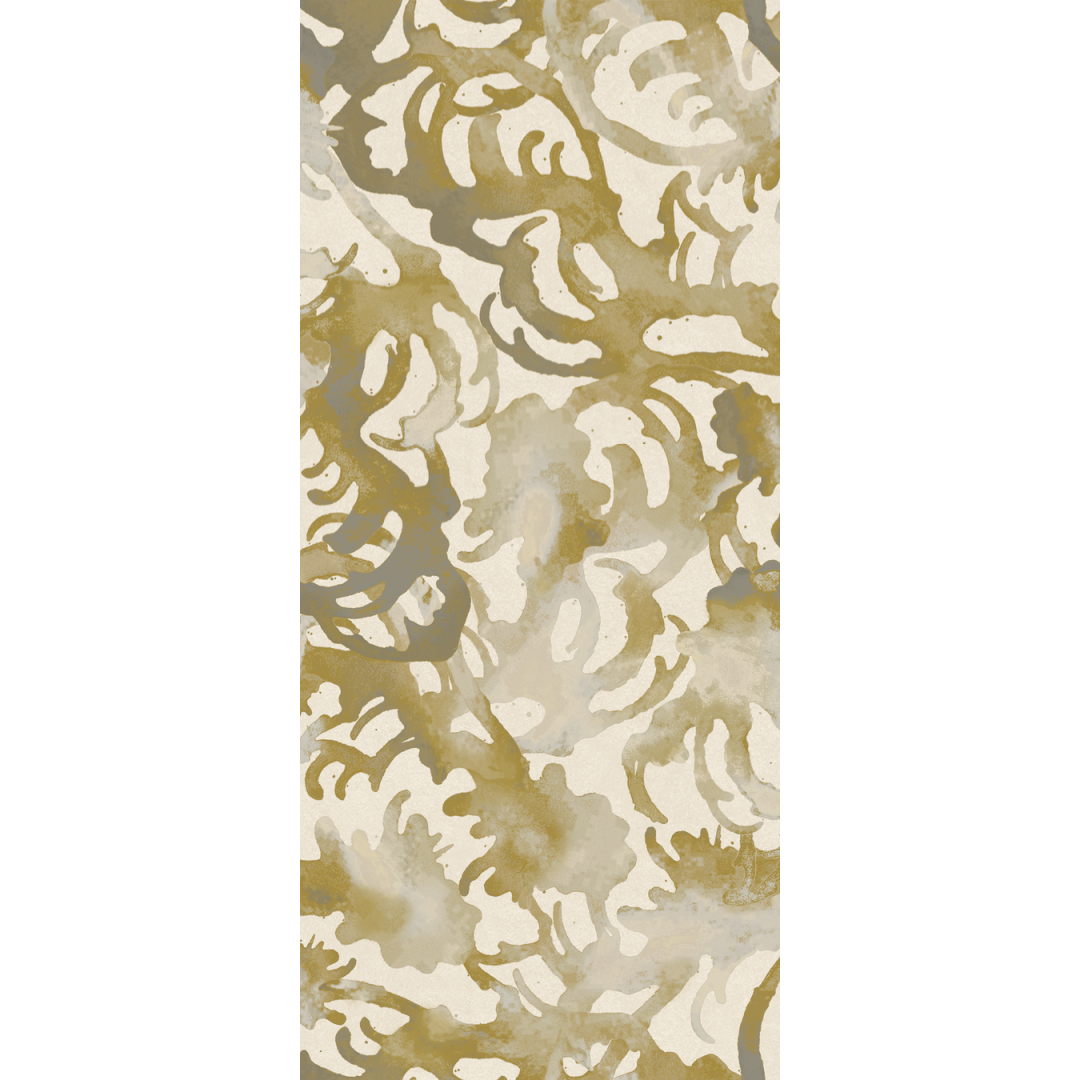
Angela Simeone is a Nashville abstract painter whose studio designs artist-made wallpaper: original brushwork and paintings translated into commercial-grade vinyl. 52” commercial width. 20 oz Type II. 20% trade discount available.
The grasscloth-or-vinyl question comes up on nearly every powder room and high-use wall project. Both materials can look extraordinary on install day. The difference shows up six months later—and in one case it holds up, and in the other it doesn’t.
Here’s how to think through it—and why the substrate choice matters as much as the pattern.
What is grasscloth wallpaper, and what are its limitations?
Grasscloth is a natural fiber wallpaper—typically woven from jute, seagrass, sisal, or similar materials, backed with paper. It has a beautiful, organic texture that reads as genuinely handmade. Designers reach for it in dining rooms, bedrooms, and living spaces where the tactile quality can be appreciated without wear.
Catherine Rowe, a UK designer and print expert, is clear about where grasscloth belongs: “Grasscl cloth, fabric, flock, and detailed papers are best suited to bedrooms, dining rooms, and living spaces where they can be appreciated without too much wear and tear.”
The limitations are real. Grasscloth absorbs moisture. It stains easily and permanently—water, soap, and everyday splashes can leave marks that cannot be wiped away. It can fray at seams over time. And in a powder room—where moisture is constant and hands reach walls—it will degrade.
What makes vinyl wallpaper the trade choice for powder rooms?
Rowe puts it plainly: “Vinyl options are the most hard-wearing and wipeable, while paper and natural fiber wallpapers tend to be more delicate but offer beautiful texture and depth.”
James Mellan-Matulewicz, CEO of Bobbi Beck, frames the purchasing decision around two factors: “Put simply, there are two main things to think about when shopping for wallpaper. The first consideration is the design. It’s essential that you like the look of the wallpaper, as it’s something you’ll be looking at often. The second factor is the durability of the material needed for your space.”
For a powder room or any wall that sees daily contact, moisture, or cleaning, durability wins. That means vinyl—specifically commercial-grade vinyl, not the thin residential vinyl that looks plasticky under close inspection.
What is 20 oz Type II commercial vinyl, and why does it matter?
Not all vinyl wallpaper is the same. Residential vinyl is typically lightweight (under 12 oz) and may not stand up to scrubbing. Commercial-grade vinyl—the standard used in hotels, restaurants, and healthcare facilities—is a different product entirely.
Type II commercial vinyl (the ASTM standard for heavy-duty commercial wallcovering) runs 20 oz and above. It’s designed for high-traffic spaces, can be scrubbed clean, holds up to cleaning agents, and is fire-rated for commercial installation. A 20 oz Type II product installed in a residential powder room will outlast the renovation cycle by years.
Mellan-Matulewicz notes that substrate and design aren’t mutually exclusive: “Both vinyl and grasscloth materials can be digitally printed, but it’s common for these materials to simply be made with a flood color, which makes them great as subtle, textural backdrops rather than bold patterns or prints.” The exception is artist-designed vinyl—where the pattern is as considered as the substrate.
Can vinyl wallpaper actually look as good as grasscloth?
The short answer: the best commercial vinyls today are not identifiable as vinyl from the room. Elizabeth Ryan, Principal Designer at Elizabeth Ryan Interiors, describes the layering principle that applies to both materials: “Grasscl cloth is most powerful when you let it be a sophisticated layer to your space instead of relying on it to be the feature. The layers of grasscloth, vibrant paintings and crisp drapery all together will give beautiful depth to a modern space.”
The same logic applies to a strong vinyl—it becomes the ground that elevates everything else in the room. If the pattern is derived from original artwork, the texture and depth that grasscloth’s natural fiber provides can be replicated through the design itself: the variation in mark-making, the layered brushwork, the way color shifts across the repeat.
Angela Simeone’s commercial vinyl wallpaper
My wallpaper line takes patterns directly from original paintings—the same brushwork and color layering I use in large-scale canvas work, translated into a repeating wallcovering. The substrate is 20 oz Type II commercial vinyl: scrubbable, moisture-resistant, fire-rated, and built to the same standard used in the Conrad Nashville and comparable hospitality projects.
At 52” commercial width, it installs cleanly with minimal seams. Sold by the yard at $55/yd with a 30-yard minimum. 20% trade discount for interior designers. Custom colorways and scale adjustments available to trade.
If you’re specifying a powder room, a high-use hallway, or a hospitality feature wall—this is the substrate that holds up. The pattern is the art. The vinyl is the proof it lasts.
→ Browse active wallpaper designs
→ Trade program — samples + 20% discount
→ Commission a custom colorway