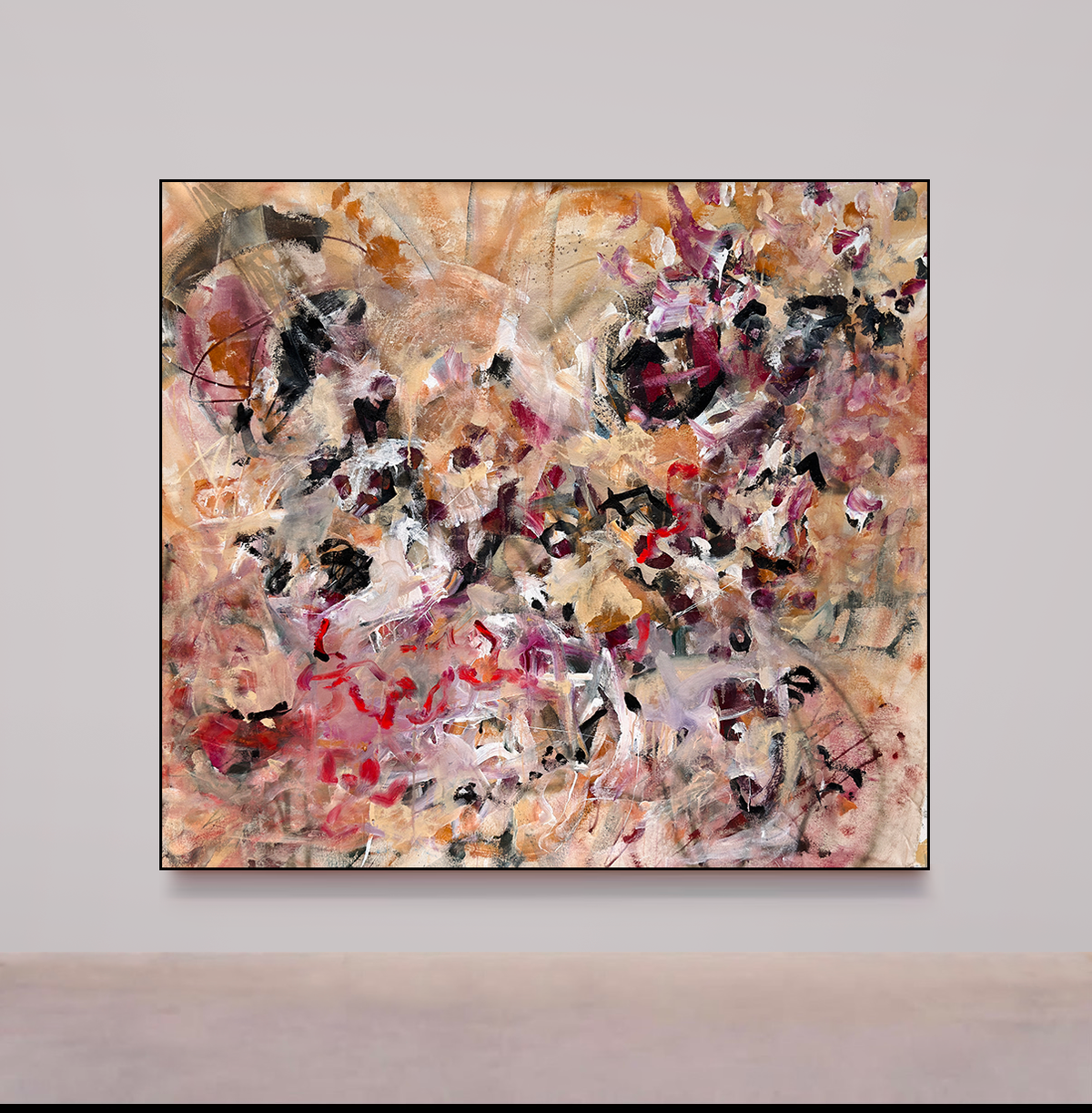
On a Phone, a Mural and a Postcard Are the Same Size
In short: A photograph flattens the three things that decide whether you will live happily with a painting: true scale, surface, and how light moves across it. Online buying has not solved this — it has narrowed it. Ask for video in real light, a shot beside a known object for scale, exact dimensions, and a close-up of one square foot of surface. Those four requests recover most of what the screen removed.
Hold your phone at arm's length. A six-foot canvas and a greetings card occupy the same rectangle of glass. Whatever else the image tells you, it cannot tell you the one thing you are actually deciding about — how much of a wall this is going to become.
Robert Manley, deputy chairman and worldwide co-head of 20th century and contemporary art at Phillips, states the problem without decoration in Robb Report's collector guide: "On your phone, everything looks the same size… there's no substitute for seeing a work of art in person, because you're going to live with it in person."
Has online buying solved this yet?
The market's own numbers say the opposite. Online art sales fell to $9.2 billion in 2025 — their lowest level since 2019, and 15 percent of total market value — according to the Art Basel and UBS Art Market Report 2026, while overall sales rose 4 percent to $59.6 billion. Buyers did not abandon the internet. They stopped completing the decision there.
That is a rational correction, not nostalgia. Screens are excellent at showing you what a painting depicts and poor at showing you what it is.
What exactly does a photograph remove?
Three things, and they are the three that matter most in a room.
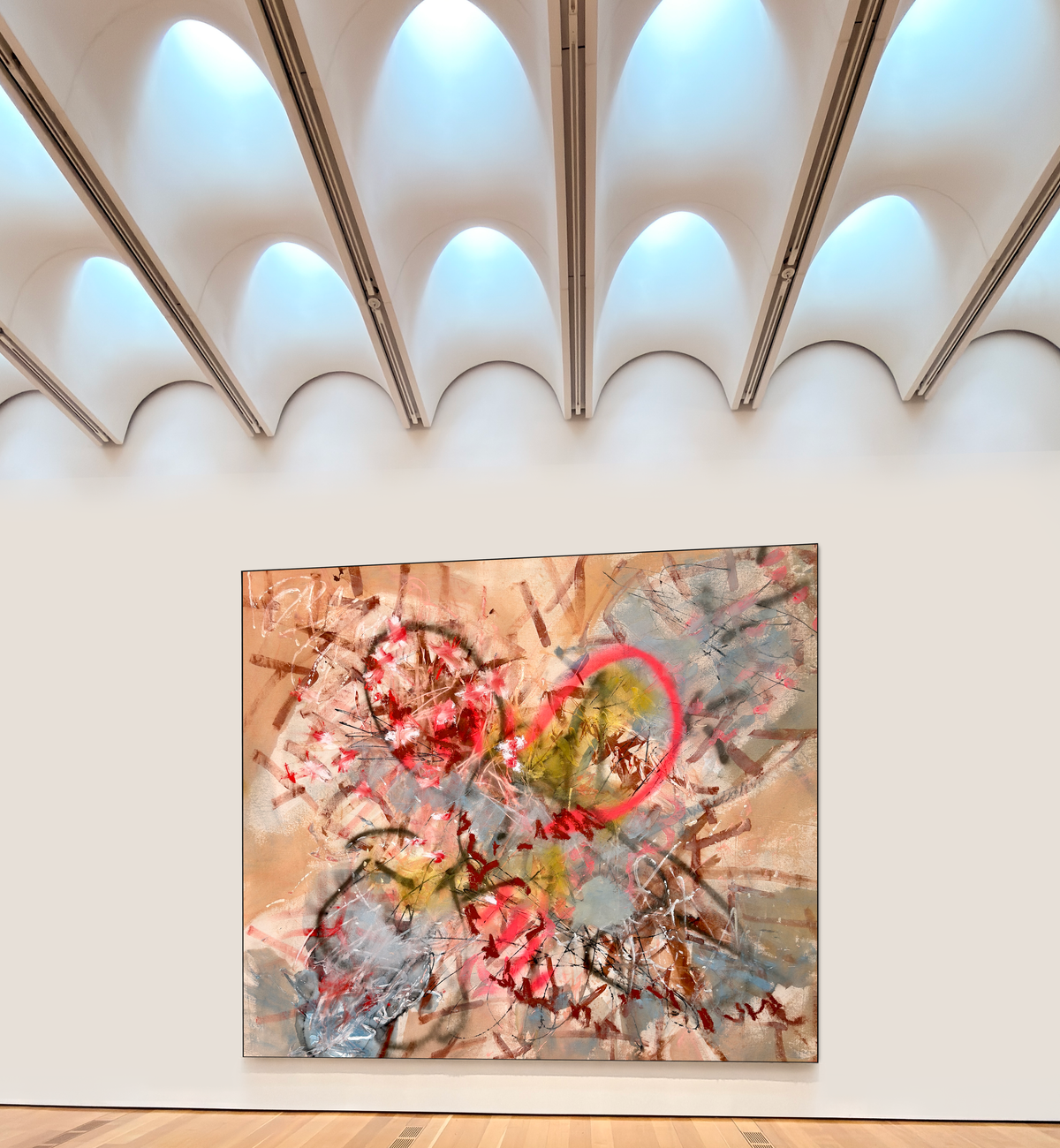
Scale. Not the number on the listing — the felt size. A canvas that reads as generous in a photograph can read as apologetic on a fourteen-foot wall, and the reverse is worse.
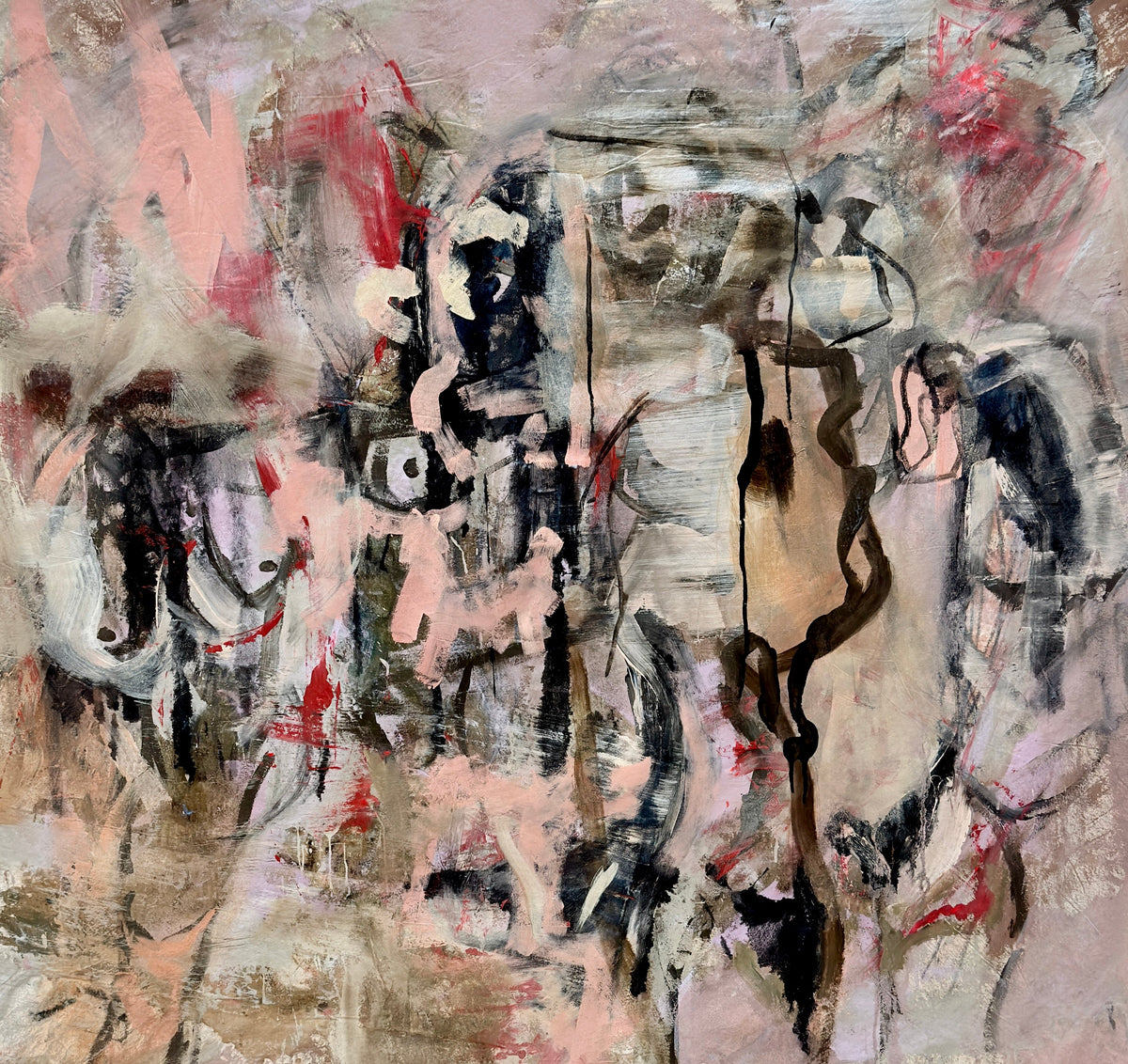
Surface. Raised paint, the ridge left by a knife, the grain of raw canvas under a stain, the places where a layer sits thin enough to let what is underneath come through. A camera has to choose one focal plane. A surface does not live on one plane.
Light. A painting is not a fixed image; it is an object that behaves differently at ten in the morning than at six at night. Photographs are taken once.
Leon Kossoff described the making side of this in language that explains why a surface holds so much: "The subject, person or landscape, reverberates in my head, unleashing a compelling need to destroy and restate." What you are looking at, up close, is the residue of that restating. A JPEG has none of it.
Celia Paul, in The Brooklyn Rail's June 2026 issue, names a material fact that no photograph on earth can carry: "The very fact that I'm using just a touch of lapis lazuli seems to give my paintings this quality of reverence." You cannot see two inches of expensive blue on a screen. You can feel it in a room.
What should you ask for when you cannot be there?
Four requests, in order of how much they recover:
- Video in real, moving daylight — not a lit product shot. Ten seconds of a camera moving across the surface tells you more than twenty stills.
- A shot with a known object in frame — a chair, a door, a person. Scale becomes readable the instant something familiar is next to it.
- Exact dimensions, then tape them on your wall. Painter's tape, actual rectangle, live with it for two days. This is free, and it settles most scale arguments before money moves.
- A close-up of one square foot. Ask for the most textured part, not the prettiest. That is where the making is visible.
Manley's other rule in the same guide is worth taking literally: "Go to museums. Go to galleries. The more you do, the more you'll be able to target what you like." Looking in person at work you are not buying is what teaches you to read the work you are.
What does the studio do about this?
Every finished work here gets multiple pre-ship videos before it leaves — real light, real scale, moving. Not because a video equals standing in front of a canvas, but because it recovers the parts a still photograph deletes, and because a buyer deciding on a significant wall deserves more than one flattering angle.
Shipping is flat $250 anywhere in the continental United States. Work ships within the U.S. only.
The purpose is not persuasion. It is giving you back the information the screen took away, so the decision you make is the one you would have made in the room.
Angela Simeone paints in Nashville — oil and mixed media on canvas, original work available now, calibrated for the light of the rooms each piece goes into. More on the practice.
Frequently asked questions
Is it safe to buy a painting I have only seen online?
It is common and it works, provided you close the information gap first: video in natural light, a scale reference in frame, exact dimensions, a texture close-up, and written confirmation of shipping and condition.
How do I judge whether a painting is the right size for my wall?
Tape the exact dimensions onto the wall with painter's tape and leave it for two days. Walk past it. Most size mistakes announce themselves within forty-eight hours.
Why do paintings look different in person?
Because a painting is an object, not an image. Surface relief, the depth of a stain, and how light travels across the paint all change as you move — and a photograph fixes a single viewpoint, a single moment of light, and a single focal plane.
What should a seller be willing to send me?
Video in daylight, multiple angles, a close-up of the surface, precise dimensions, and clear terms on shipping and documentation. A seller who declines all of that has told you something useful.
Sources
- Robb Report, The 8 Rules Every Art Collector Needs to Know
- The Art Basel and UBS Art Market Report 2026 (Arts Economics)