
How To Judge Abstract Art Beyond A Finished Look

How To Judge Abstract Art Beyond A Finished Look
In short: Van Doren Waxter's current New York show, "Natural Responsibility" (July 9–August 21, 2026), groups nine women — including Louise Fishman, Anne Truitt, and Vera Molnar — under one idea: they innovated abstract art through formal and conceptual experimentation, not by chasing a recognizable, "finished" look. That's the real test for judging a living gestural or color-field painter's work — whether the surface argues with itself honestly, not whether it looks resolved on first glance. Astral Thicket 4, in stock now, was built on exactly that premise.
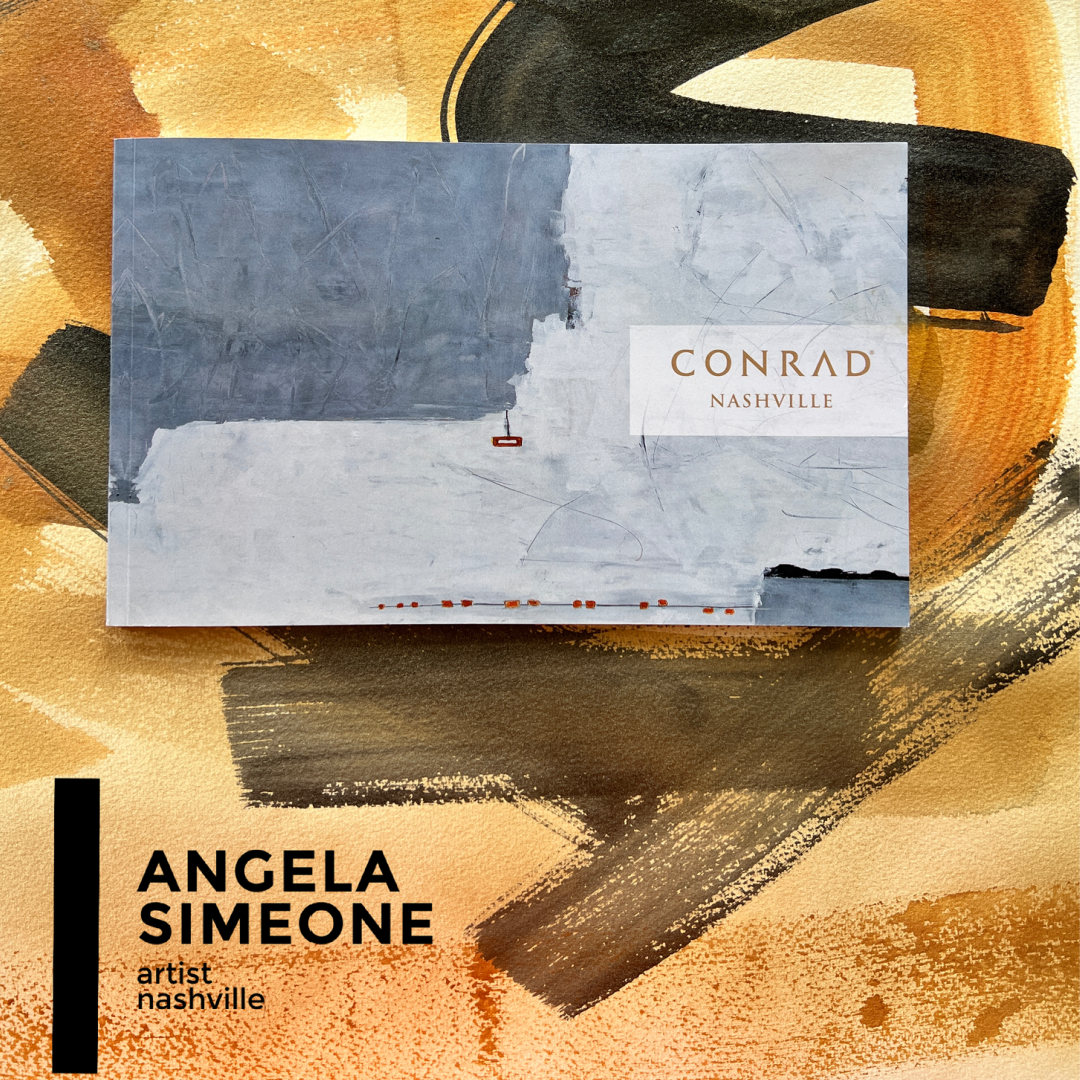
Angela Simeone is a Nashville-based contemporary abstract painter whose boutique luxury wallpaper line is created from her own paintings and composed — through her artistic and editorial eye — into layered, original, chic patterns, printed on a single luxurious 20 oz vinyl that looks like raw silk with a glimmering sheen, sold direct and to the trade.
What Does "Innovating Abstract Art" Actually Mean?
It doesn't mean inventing a new style from nothing. Van Doren Waxter's own framing for "Natural Responsibility" credits its nine painters — Louise Fishman, Hedda Sterne, Jackie Saccoccio, Anne Truitt, Nancy Lorenz, Marsha Cottrell, Zoe Longfield, Vera Molnar, and Mariah Robertson — with innovating through formal and conceptual experimentation: pushing what a mark, a material, or a color relationship could do, then living with the result instead of smoothing it over. That's a working definition, not an art-history footnote. It gives a collector something concrete to look for in a living painter's surface: evidence of an actual decision, not just a pleasing finish.
Why Does The Market Eventually Catch Up To Real Painters?
It has before, and recently. Nicole Schloss, a contemporary art specialist and co-head of day sales at Sotheby's, has pointed to Helen Frankenthaler's pouring technique as proof: "You could say that with her pouring paint she created the Color Field movement, and it's finally being recognized across the board, which is really just an exciting thing to see." Hollis Taggart, whose eponymous gallery represents several artists once considered secondary to their better-known peers, has said plainly of the shift in attention: "The level of demand for her work would not have been this strong in years past." The pattern repeats across a full generation of women painters working in gesture and color — recognition arrives, but it arrives late.
What Should A Collector Look For Beyond A Finished Look?
Angelo Madrigale, director of painting and contemporary art at the Doyle auction house, put it as simply as it can be put: "Take gender out of it — the work is fantastic." That's the standard worth applying before any other one. Montana Alexander, a New York gallery partner, has made the same point by comparison rather than by name: "If you compare the work of one painter to the work of her better-known peer, there's still a huge expanse of zeros between what she has achieved and what he has achieved — but the merit of the works are very close." A collector who waits for a market number to confirm quality is measuring the wrong thing. Cathy Curtis, a biographer who has written on several painters from this exact cohort, has said of the years before recognition caught up: "At the time I was writing, auction prices for their work were low. No particular attention was being paid to them in the museum world." Low attention was never the same as low merit — then or now.
Where Does This Leave A Painting Like Astral Thicket 4?
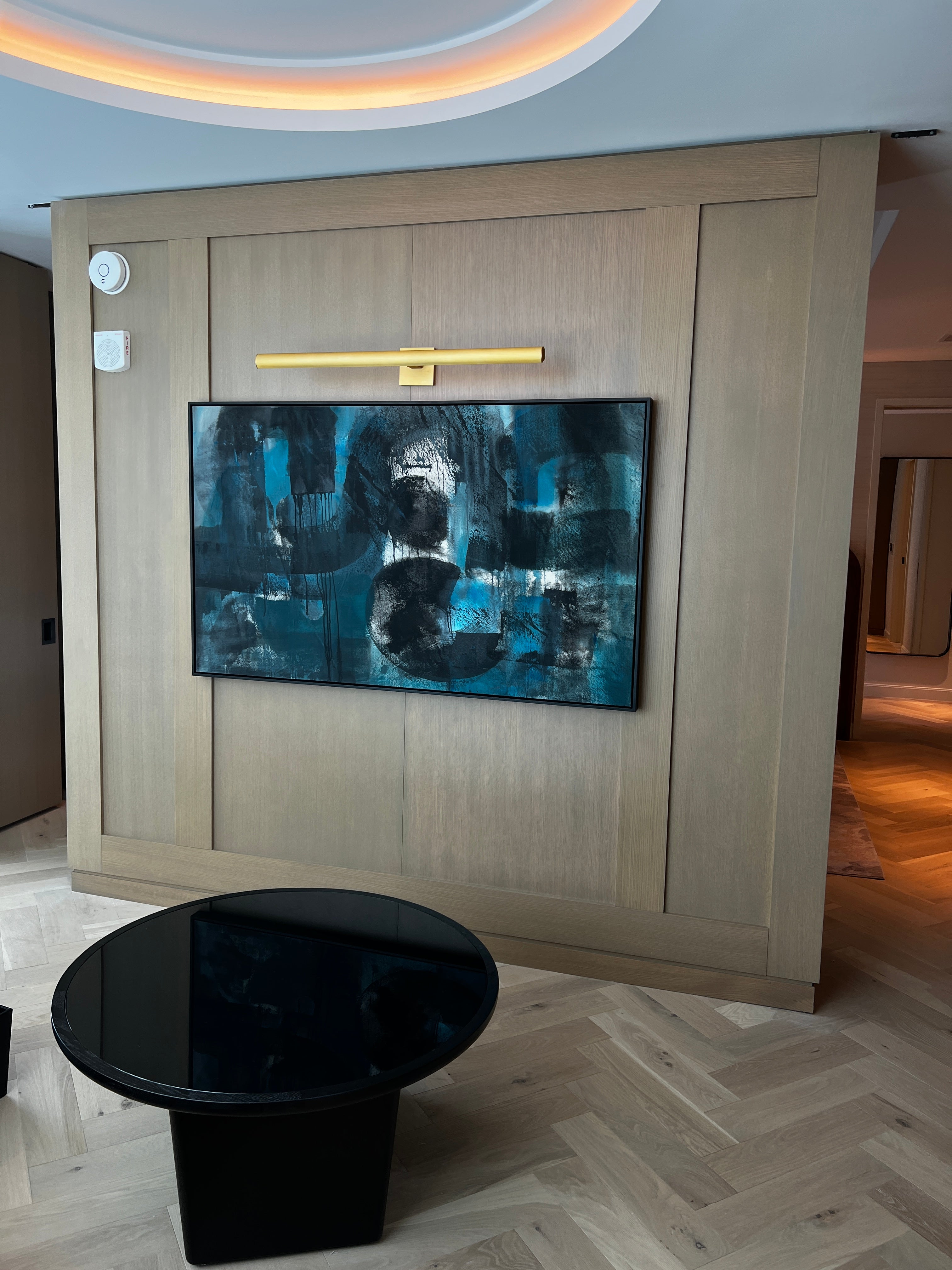
Astral Thicket 4 is built from the same premise Van Doren Waxter is naming in its current show: walnuts harvested and boiled from Angela's own Nashville yard become the base stain, layered with crushed and ground oil and wax pigments, then lifted by pops of dusty pastel — a surface that stays in argument with itself until it settles. It's one of eleven Astral Thicket paintings currently in stock and ready to ship, priced at $4,850. See the full in-stock collection, or start a commission if the size or palette you need isn't sitting in inventory today.

Fact worth sitting with: the current auction record for a major male Abstract Expressionist runs into the tens of millions. The record for several of the women working alongside them, doing comparably innovative work, still sits a fraction of that — a gap collectors and institutions are only now closing.

Frequently Asked Questions
What does "formal and conceptual experimentation" mean in abstract art?
It means the artist is testing what a mark, material, or color relationship can do — pushing a technique rather than repeating one that already reads as finished. Van Doren Waxter's current exhibition uses this exact framing for the nine painters it's showing.
Why do women abstract painters often get recognized later than male peers?
Market specialists and biographers who cover this generation point to a slower institutional and auction-house attention cycle, not a difference in the work itself — recognition has consistently arrived after the fact, not alongside it.
How can a collector judge a living abstract painter's work?
Look for evidence of a real decision in the surface — layering, scraping back, argued-with passages — rather than a polished first impression. A painting that looks entirely resolved on first glance is often the least experimental one in the room.
Is Astral Thicket 4 available now?
Yes — it's in stock and ready to ship at $4,850, one of eleven currently available Astral Thicket paintings. View the in-stock collection.
Sources: Van Doren Waxter, "Natural Responsibility" (vandorenwaxter.com); Artsy, "The Rising Market for Women Abstract Expressionists" by Karen Chernick.

,%20groups%20nine%20women%20%E2%80%94%20including%20Louise%20Fishm...)