How to Choose the Right Size Painting for a Wall
TL;DR: To choose the right size painting for a wall, aim for art that spans about two-thirds to three-quarters of the furniture below it, hang it so the center sits near 57–60 inches from the floor, and in a tall or open room, size up rather than down. The most common mistake is going too small. Here is how to choose the right size painting for a wall — over a sofa, on a large blank wall, or in a room with height to fill.
Angela Simeone is a Nashville-based contemporary abstract painter whose boutique luxury wallpaper line is created from her own paintings and composed — through her artistic and editorial eye — into layered, original, chic patterns, printed on a single luxurious 20 oz vinyl that looks like raw silk with a glimmering sheen, sold direct and to the trade.
What size painting should go over a sofa?
Roughly two-thirds the width of the sofa, sometimes three-quarters. For a standard 84-inch sofa, that means a painting (or a tight grouping) around 56 to 62 inches wide. The art should relate to the furniture beneath it, not float like an afterthought above it. Leave six to ten inches of breathing room between the top of the sofa back and the bottom of the frame so the two read as one composition.
How high should a painting hang?
Hang it so the center of the painting lands about 57 to 60 inches from the floor — average eye level. Over a sofa or console, that often means the gap above the furniture is smaller than people expect. The art being "exactly right" is only half the job; if the scale and the height are off, even the right painting looks wrong on the wall.
When should I go large?
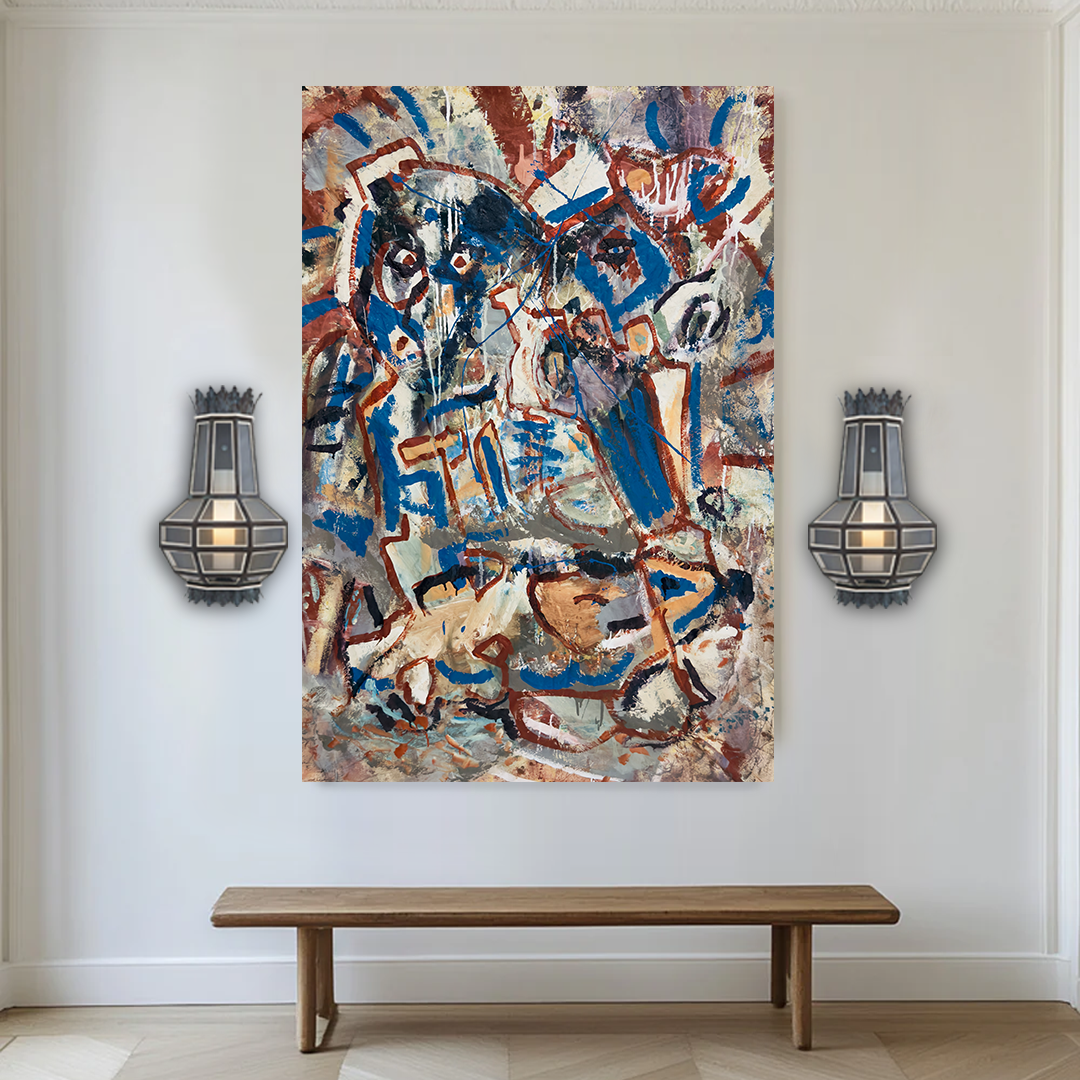
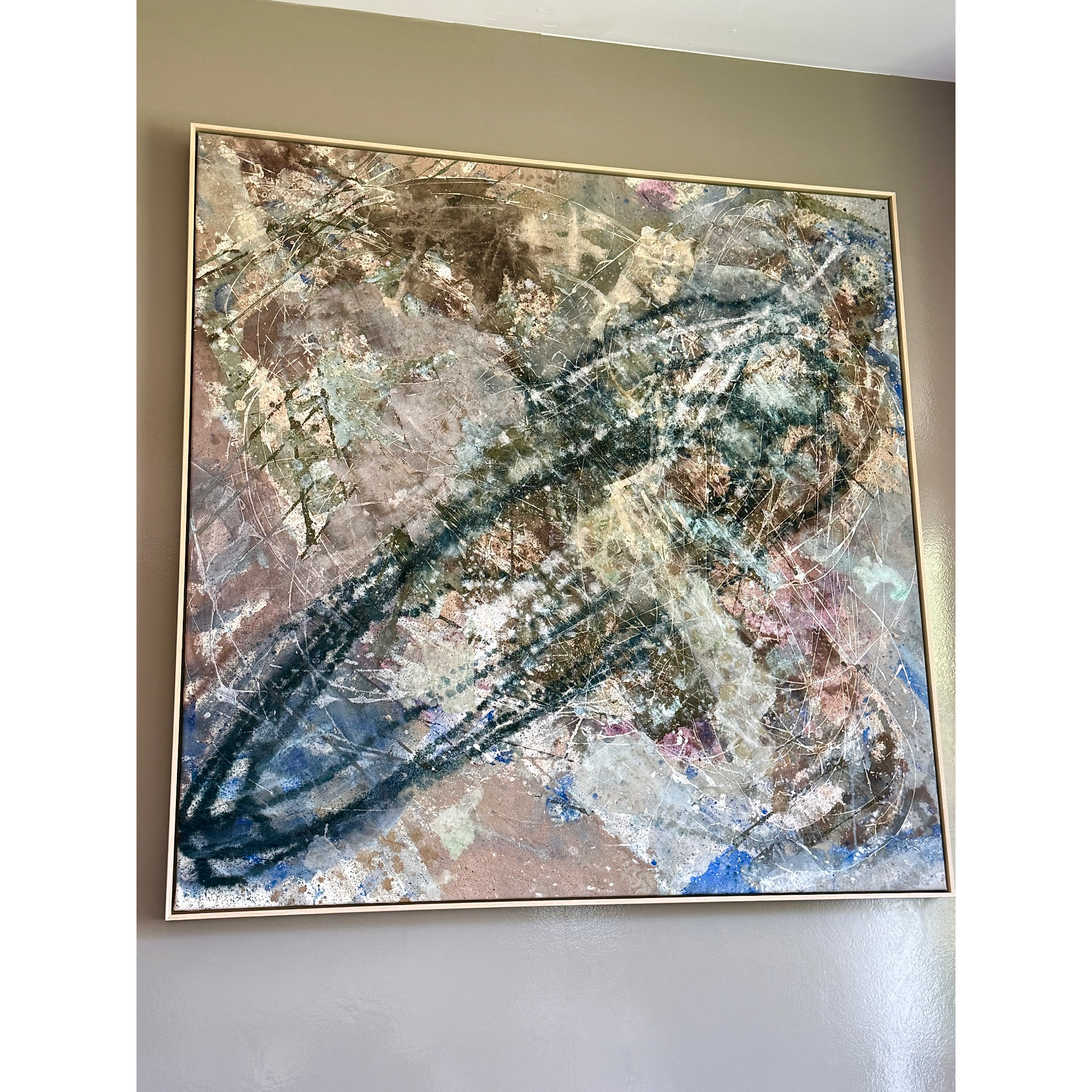
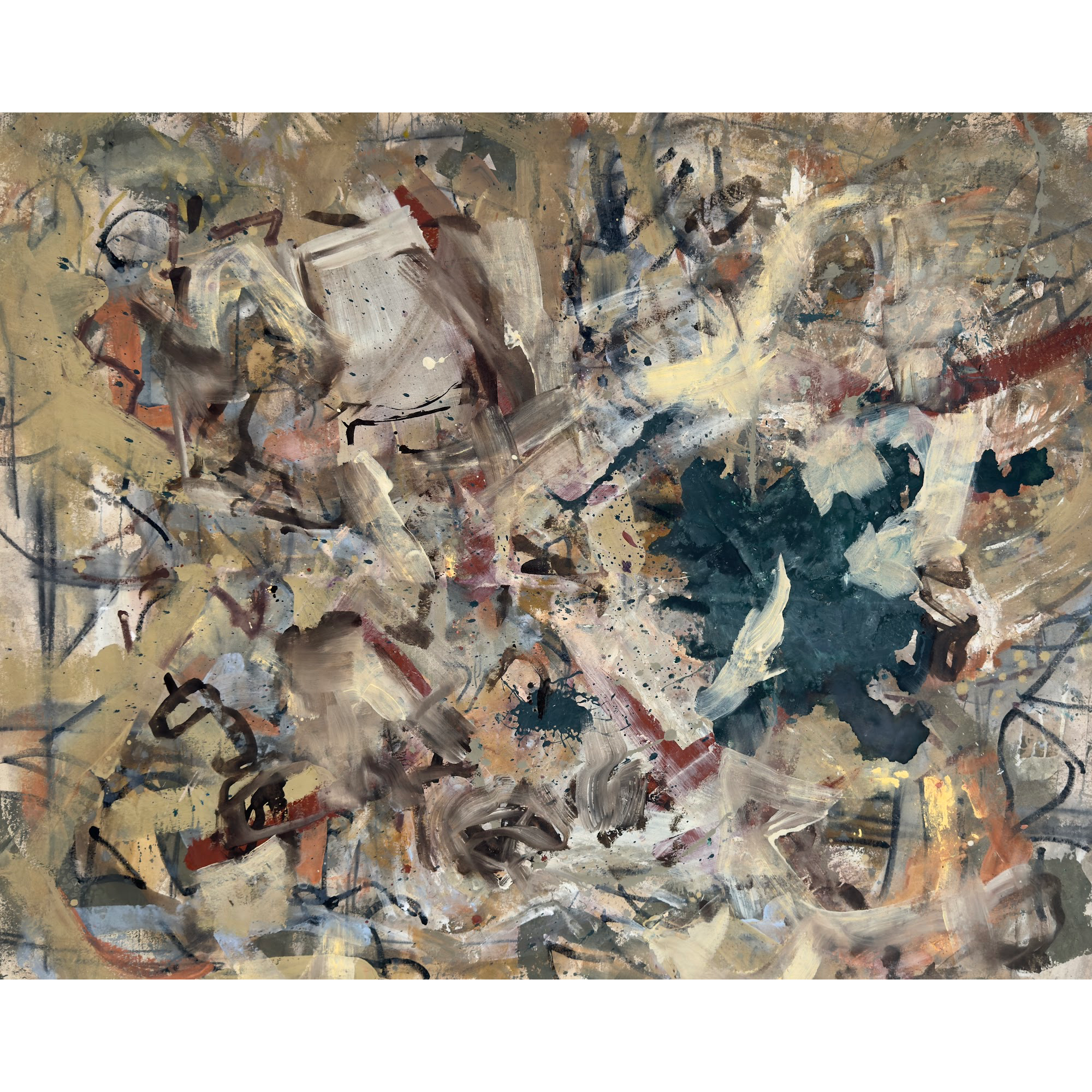
When the wall has height, when the room is open, or when you want one piece to set the tone instead of several competing for it. A large-scale painting becomes the anchor a room is arranged around — it resists a single focal point on purpose, so the eye keeps traveling and the room keeps unfolding. Large work suits exactly the rooms that need a story told: open living spaces, stairwells, and commercial or hospitality interiors. My original paintings available now include large-scale pieces built for this, and a commission can be made to an exact size when nothing in stock fits the wall.
"There is a right physical size for every idea." — Henry Moore, sculptor, "The Sculptor Speaks"
"I paint very large pictures… precisely because I want to be very intimate and human. However you paint the larger picture, you are in it." — Mark Rothko, painter (Interiors, 1951)
"I'll paint it big and they will be surprised into taking time to look at it." — Georgia O'Keeffe, painter ("About Myself," 1939)
"A large-scale piece of art is the perfect anchor around which your entire living room can be designed." — Laura Chappetto, interior designer, Element Design Network
"The art can be exactly right, but proportion and scale are important for the art to work well in a space." — Rona J. Spiegel, ASID, interior designer (Dwell)
How do I size art for a big blank wall?
Treat the wall, not the furniture, as the measure. Fill about two-thirds to three-quarters of the open span with a single large work or one oversized piece, leaving even margins so the wall frames the art. On a very large or double-height wall, a piece built across canvas tiles can scale past 90 inches without an upper limit — ideal for lobbies, atriums, and hospitality spaces. When in doubt, size up: a too-small painting reads as timid, while a generous one reads as intentional.

A quick test before you commit
Cut paper or use painter's tape to outline the size you are considering directly on the wall, then live with it for a day. It is the simplest way to see scale honestly before choosing. For a deeper look at how I build work at scale, the artist page walks through painting in the round — composed from all four sides so a large piece has no single beginning or end.
For broader proportion guidance, design editors at Dwell consistently flag undersized art as one of the most common scale mistakes in a room.
FAQ
What is the two-thirds rule for wall art? Wall art should span about two-thirds the width of the furniture beneath it, which keeps the art and the furniture in visual proportion.
How high should art hang over a sofa? Center the piece near 57–60 inches from the floor, with six to ten inches between the sofa back and the bottom of the frame.
Is it better to go bigger or smaller? Bigger, in most rooms. The most common scale mistake is choosing art that is too small for the wall.
What if nothing fits my wall? Commission a piece to an exact size; works can be built across canvas tiles with no upper size limit.
Browse original paintings available now or start a commission sized to your wall at angelasimeone.com.
Sources: Henry Moore, "The Sculptor Speaks" (Tate); Mark Rothko (Interiors, 1951); Georgia O'Keeffe, "About Myself" (1939); Laura Chappetto, Element Design Network; Rona J. Spiegel, ASID (Dwell); Dwell, "Interior Designers Speak: Common Design Mistakes."