Abstraction Arrives After the Drawing Is Learned
In short
Most serious abstract painters trained representationally first. The skepticism behind the question — does abstraction let people who cannot draw call themselves painters — has a real answer, and it is biographical rather than theoretical. Years of portraiture, printmaking, illustration and apprenticeship teach the eye proportion, value, edge and structure. Abstraction is what a painter does with that equipment once literal description stops being the point. The training does not disappear; it stops being visible.
What Does Drawing Training Actually Teach a Painter?
I trained in portraiture, printmaking and illustration before any of this. I spent three years apprenticed to the Nashville painter David Guidera. I came to abstraction after all of that — and the abstract practice itself is something I taught myself.
That sequence matters, because it is the honest answer to a question people ask carefully and mean bluntly: can she draw, or is the abstraction hiding something?
Drawing training is not a certificate. It is a set of judgments that get installed in the eye and then stop being conscious. Where a value turns. How much edge a form needs before it separates from what is behind it. Which of two nearly identical greys is actually carrying the light. Whether a shape is sitting on the surface or receding into it. None of that leaves when the subject does.
Ingres put the claim at its most severe: "Drawing is the probity of art." Probity — honesty, integrity under audit. He meant that drawing is where a painter cannot fake it, and he was right in a way that outlives his own century's subject matter.
Do Abstract Painters Come From Representational Training?
More often than the skeptic assumes. The evidence is not anecdotal — it is currently on museum walls.
This June, CCS Bard's Hessel Museum of Art opened Betty Parsons: An Expanded World, the first major retrospective of Parsons as both painter and gallerist, on view through October 18, 2026. Its own catalogue framing traces her across six decades as she evolved "from a young academic painter to a mature abstractionist." Academic first. Abstract after.
Tom Eccles, Executive Director of the Center for Curatorial Studies at Bard College, frames the show as "an overdue exploration of her game-changing vision and of Parsons as a formidable artist in her own right." Curator Kelly Taxter describes her as "an artist, visionary art dealer, poet, aesthete, and restless traveler," someone "simultaneously forging her own distinctive artistic path" while running the gallery that launched Rothko, Newman and Pollock. Lauren Cornell, Artistic Director of the Hessel Museum, notes that the exhibition — co-organized by Taxter with the painter Amy Sillman — "illuminates the dynamic relationship between Parson's artistic practice and her gallery."
The museum's own biographical note makes the connection explicit in a sentence worth sitting with: her eye for innovative talent "was deeply informed by her own artistic training." The eye that recognized Pollock was a trained draughtsman's eye. The training was the instrument.
Odilon Redon — one of the most disciplined draughtsmen of his century — said of his own work that it was made "to inspire, and not to be defined," placing the viewer "in the ambiguous realm of the undetermined." He could not have written that sentence without first being able to define anything he chose to.
Can Abstraction Be Judged, or Is It All Preference?
It can be judged, and the tools are the same ones drawing teaches. Value structure. Whether the surface holds together at three distances rather than one. Whether the edges are decisions or accidents. Whether the color relationships are doing work or just co-existing.
The philosopher and critic Arthur Danto argued that seeing something as art requires "an atmosphere of artistic theory, a knowledge of the history of art" — that recognition is trained, not given. That cuts both ways. It means abstraction is not automatically legible, and it means the ability to read it is learnable rather than mystical.
Kimon Nicolaïdes, whose The Natural Way to Draw has taught draughtsmanship since 1941, put the learning curve plainly: "The sooner you make your first five thousand mistakes, the sooner you will be able to correct them." Five thousand. That is the number nobody sees in a finished abstract painting, and it is the whole answer to the question.
What Does That Training Look Like in My Own Studio?
It looks like a charcoal underdrawing that never gets fully covered.
I start most pieces with charcoal on the canvas — structure, weight, where things sit. Then oil thinned with medium goes over it, palette knife, fingertip, layers built up over weeks. The charcoal stays partly visible on purpose in many of the finished works, because it is load-bearing. Take it out and the surface loses its skeleton.
I work flat, circling the canvas from all four sides, so a piece never gets composed for a single vantage point. The brush moves from the shoulder; there is very little wrist in it. That is a physical habit built in the years when I was drawing things that had to look like something.
Käthe Kollwitz — as rigorous a draughtswoman as the twentieth century produced — wrote that she was "content that my art should have purposes outside itself." The purpose changed for me. The drawing did not.
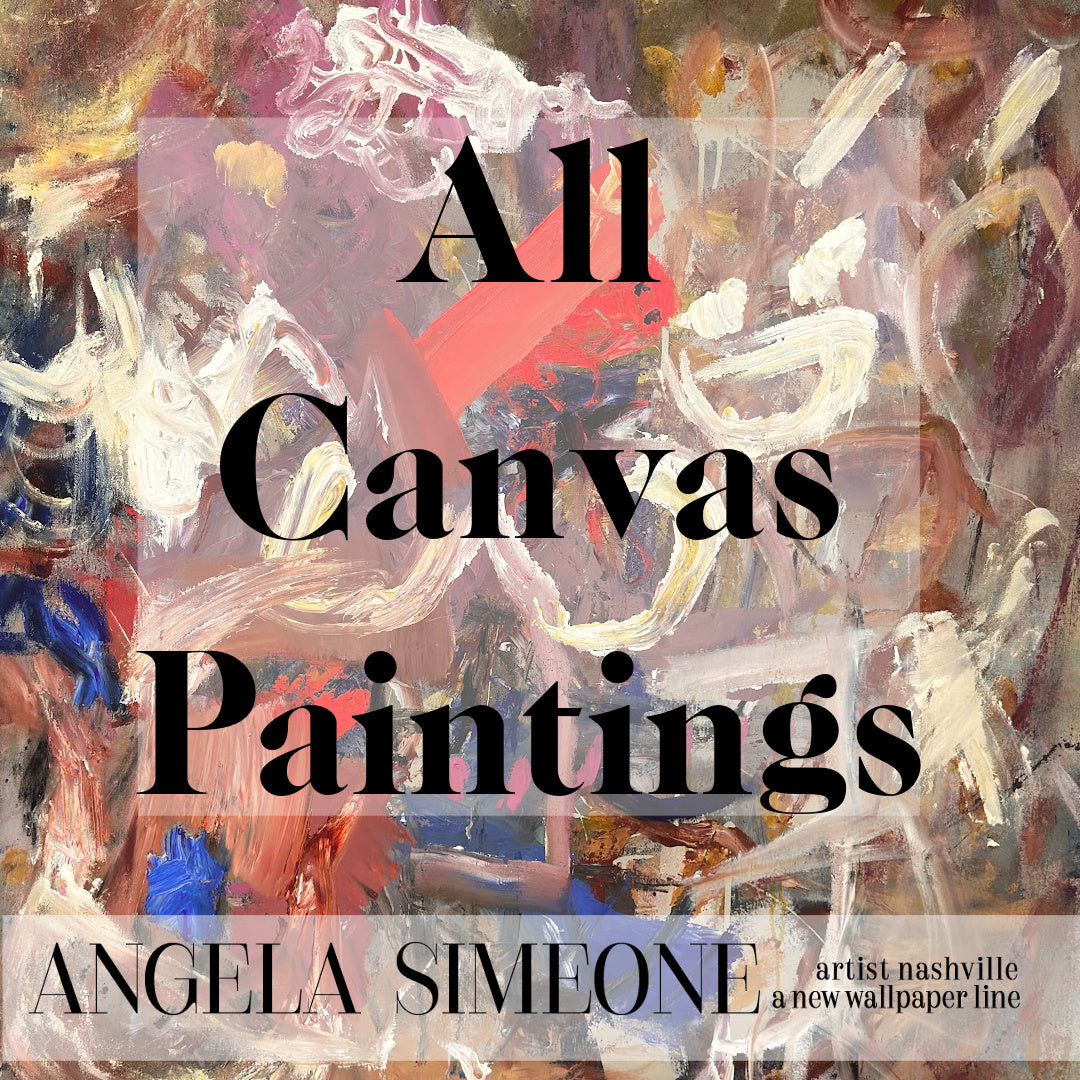
You can see the underdrawing surviving in the original paintings currently in stock, and you can read the fuller account of the path from portraiture to abstraction on my studio page.
FAQ
Do abstract artists need to learn to draw first?
Not by rule, but most serious ones did. Drawing training installs judgments about value, edge, proportion and structure that keep working after the subject is removed. Betty Parsons moved from academic painting to abstraction over six decades; the same path is common enough to be unremarkable among painters with sustained careers.
How can I tell if an abstract painting was made by someone with real skill?
Look for decisions rather than incident. Does the value structure hold when you squint? Do the edges vary deliberately — some hard, some dissolved — or all the same? Does the surface still read from across the room and reward a close look? Skill shows in control of those variables, not in recognizable subject matter.
What training does Angela Simeone have?
Early training in portraiture, printmaking and illustration, plus a three-year apprenticeship with Nashville painter David Guidera. The abstract practice itself is self-taught, built over more than twenty years of working in oil and mixed media on canvas.
Is abstract art harder or easier to make than representational art?
Different, not easier. Representational work has an external standard to check against. Abstraction has to generate its own, which is why the trained judgments matter more, not less.
Links
-
Internal:
/collections/paintings-available-now·/pages/angela-simeone·/pages/commissions - Outbound: CCS Bard, Betty Parsons: An Expanded World — https://ccs.bard.edu/news/452-first-retrospective-exploring-betty-parsons-dual-legacy-as-artist-and-gallerist-to-open-at-ccs-bard-june-2026