A Painting's Layered Surface Beats Its Scale

In short: No, an abstract painting does not have to be large or gestural to carry real intelligence. Critic John Yau's July 2026 review of Abstract Expressionist Charles Seliger makes the case directly: Seliger built a six-decade career at an intimate scale, finding what Yau calls the "invisible structures and patterns governing the visual world" instead of chasing size or one dramatic gesture. That gives a collector real permission to judge a painting by its built-up internal logic, not its dimensions.
Angela Simeone is a Nashville-based contemporary abstract painter whose boutique luxury wallpaper line is created from her own paintings and composed — through her artistic and editorial eye — into layered, original, chic patterns, printed on a single luxurious 20 oz vinyl that looks like raw silk with a glimmering sheen, sold direct and to the trade.
Does an abstract painting have to be large or gestural to feel serious?
No — and one of the clearest cases against that assumption is Charles Seliger, one of the youngest painters associated with Abstract Expressionism, given his first solo show at Peggy Guggenheim's gallery at nineteen. Writing in Hyperallergic this July, critic John Yau notes that unlike most of his contemporaries, Seliger "never worked on a large scale, nor did he become a gestural or geometric painter." He spent his career instead finding beauty in "the invisible structures and patterns governing the visual world" — proof that scale and gesture were never the only path to a serious abstract practice.
What does a painting's "invisible architecture" actually mean for a collector?
It means looking for what's built up under the surface, not just what registers at first glance. A painting with real internal architecture rewards a second and third look — the layering keeps producing new information the way a piece of music reveals new detail on a repeat listen. That's the quality Yau is naming in Seliger's work, and it's the same quality that separates a painting worth living with from one that reads as a single, flat impression.

How can a collector learn to see layering instead of just color or size?
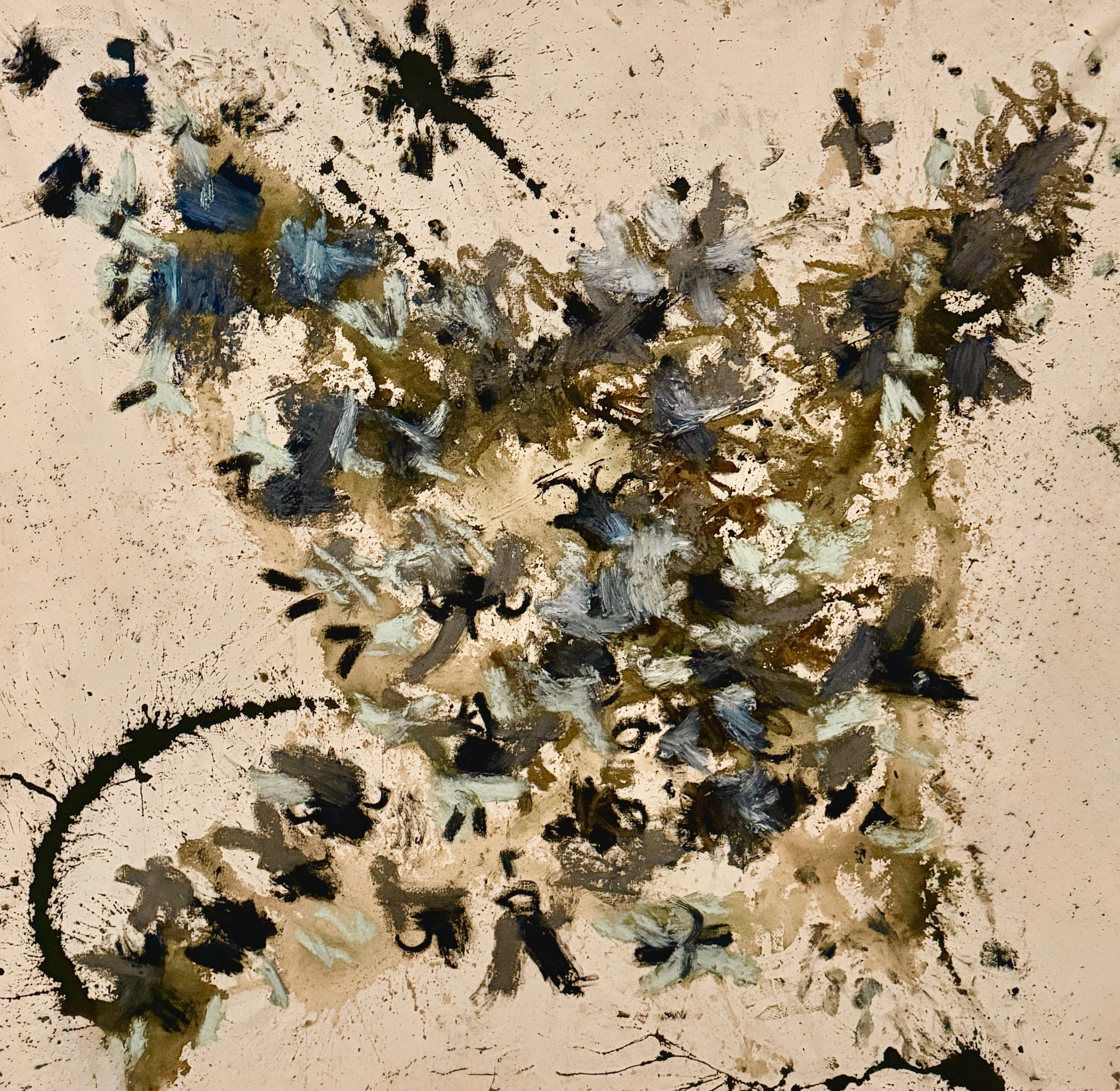
Stand closer than the room invites you to. A painting built in layers — oil thinned with medium, charcoal underdrawing, a surface scraped back and argued with over weeks — shows its history at close range in a way a single flat pass of paint never can. Look for where an earlier layer is still visible through a later one; that's the internal logic Yau is describing, and it has nothing to do with how many square feet the canvas covers.
Why does staying at an intimate scale sometimes take more discipline than painting big?
Because there's less room to hide. A large, gestural canvas can carry a single strong move across a lot of surface; a smaller, layered one has to justify every inch through built-up decision-making. Seliger's independence from the scale and gesture that defined his generation is exactly why, as Yau notes, he's "seldom included in surveys of Abstract Expressionism" that focus on stylistic similarity — his path required its own kind of discipline, one that didn't photograph as dramatically but held up just as well.

Frequently asked questions
Is a large abstract painting automatically more powerful than a smaller one?
No — critic John Yau's read on Charles Seliger argues the opposite: a painting's intelligence lives in its built-up internal structure, not its dimensions or gesture.
What should I look for in a layered abstract painting?
Places where an earlier layer shows through a later one — that visible history is the internal logic worth valuing, and it rewards close viewing more than a quick glance from across the room.
Does a smaller painting work as well in a large room?
It can, especially grouped or placed with intention — the impact comes from what the surface does at close range, not the square footage it covers.
Why did Charles Seliger stay outside the mainstream of Abstract Expressionism?
He never adopted the large scale or gestural mark-making that defined the movement, choosing instead to build intricate, intimate-scale surfaces — an independence that kept him out of most surveys of the period focused on stylistic similarity.
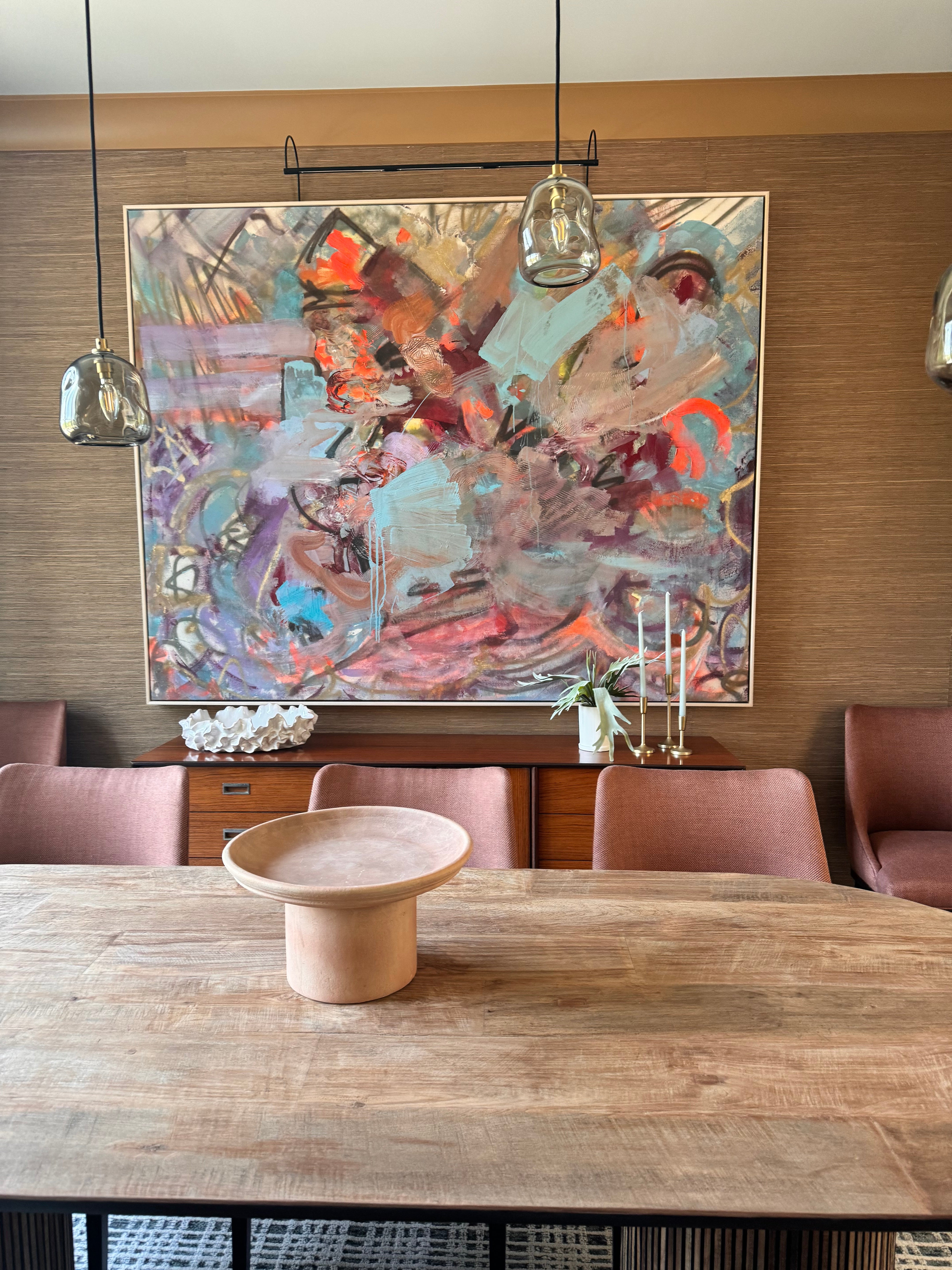
Layered, built-up originals ready to ship now are in the available collection, sized for a range of rooms. A piece built to a specific wall's scale and story can start as a commission. Designers working across scale for commercial or hospitality projects can find capability and pricing on the Commercial & Hospitality page, and the practice behind the layering is on Meet Angela.
Source: John Yau, "Charles Seliger Painted Nature's Invisible Architecture," Hyperallergic, July 4, 2026.