10 Quotes About Texture Every Abstract Art Collector Should Know

In short: Texture in abstract art — visible brushwork, palette-knife ridges, scraped-back layers — has become one of the most-searched qualities collectors look for in an original painting, and this season's design press is naming it directly: a reaction against flat, AI-generated imagery in favor of surfaces that carry the plain evidence of a human hand. Below, ten verified quotes — five from working interior designers on why texture is driving 2026 rooms, five from painters and thinkers across a century of work on texture and mark-making — frame why a real, hand-built surface reads differently than anything printed or generated.
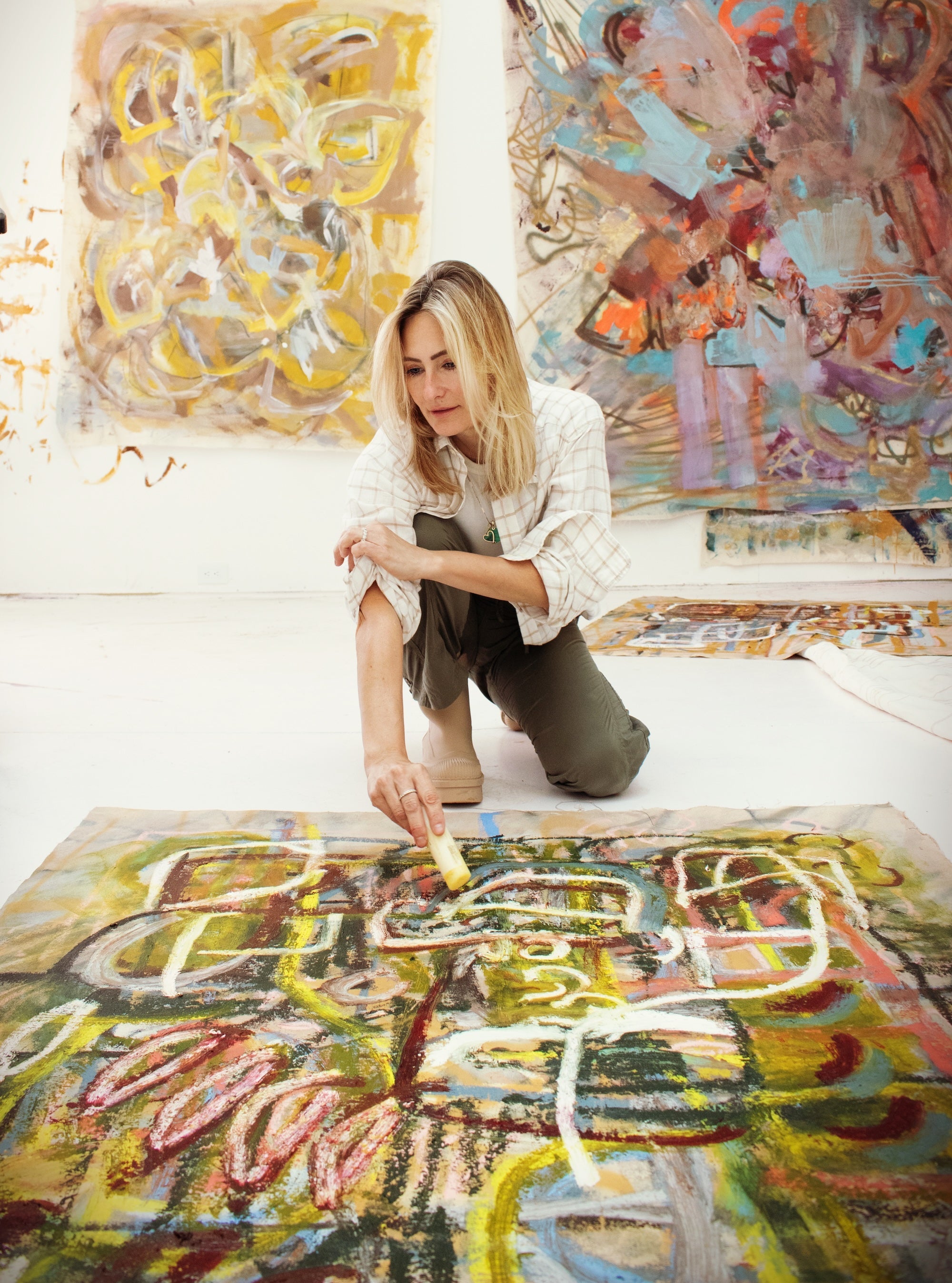
Angela Simeone is a Nashville-based contemporary abstract painter whose boutique luxury wallpaper line is created from her own paintings and composed — through her artistic and editorial eye — into layered, original, chic patterns, printed on a single luxurious 20 oz vinyl that looks like raw silk with a glimmering sheen, sold direct and to the trade.
Why does texture matter so much in a room right now?
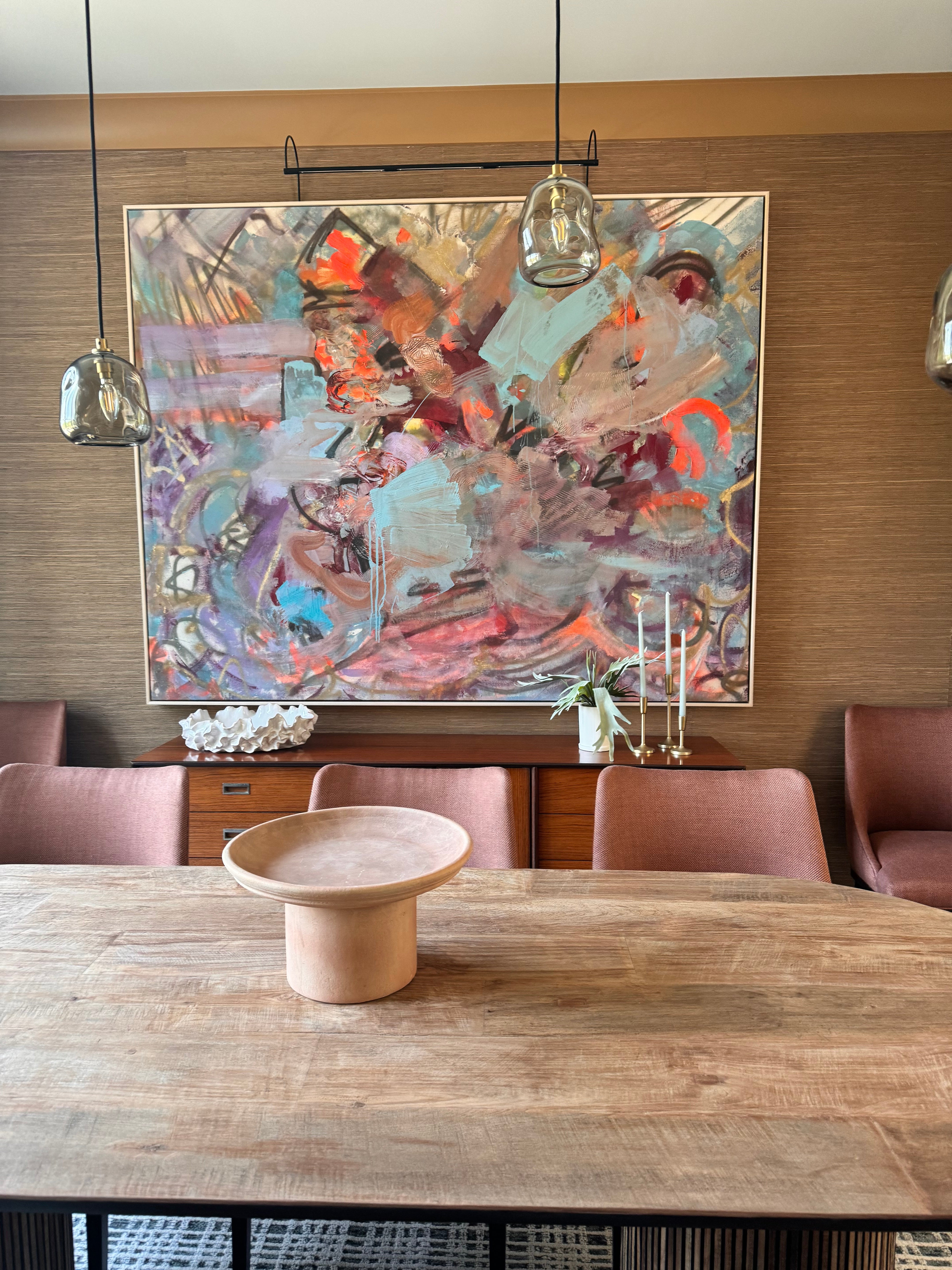
Because flat surfaces are everywhere — on a screen, in a print, in an AI-generated image — texture has become the one thing a room can't fake. A painting built up in layers, scraped back, argued with over weeks, holds light differently at ten in the morning than at six at night. That's not a design trend. That's what happens when a surface is actually made by hand.
1. Lindley Arthur — texture as the thing that makes a room feel alive
Interior designer Lindley Arthur puts it plainly: "Layering texture — whether through textiles or finishes — is essential to creating a space that feels warm, personal, and truly alive. The key is balance. With fabrics, it's about mixing tighter weaves with richer materials like velvet or bouclé to create contrast and depth." A textured original painting does the same job a well-chosen bouclé does — it gives the eye somewhere to land and something to feel, even from across the room.
2. Lindley Arthur — the tactile moment that makes a house a home
Arthur goes further on why texture reads as comfort, not just design: "Curling up on a velvet sofa beneath a hand-knit throw, feeling the softness of a custom wool rug underfoot... these tactile moments engage the senses and ultimately make a space feel like home." A painting with real ridges of paint is a tactile moment too — you can see the decision in it, even if you never touch the canvas.
3. Louise McGarry — wallcoverings as a powerful, quiet tool
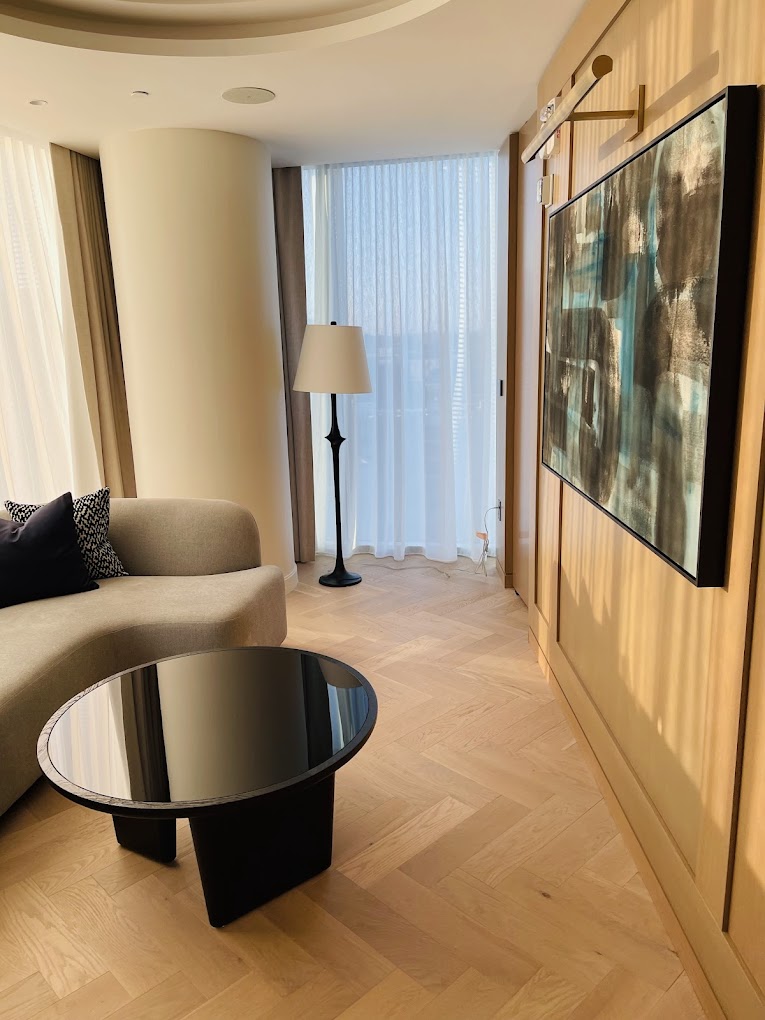
Louise McGarry, Creative Director of Studio Braw, names textured wallcoverings directly: "Textured wallcoverings are another powerful tool; grasscloths, silks, and linens can completely transform a space." The same is true of a wall built around a large, heavily worked painting — the surface itself becomes the material story of the room.
4. Abbie Naber — texture creates depth color alone can't
Abbie Naber, founder of A. Naber Design, makes the case for texture over color as the real driver of depth: "You can intentionally forgo color and rely heavily on layering textures to create a warmer, more elevated space. Texture creates visual depth, adds softness, and makes a room feel lived in." A textured abstract painting can carry a nearly neutral palette and still be the most alive thing in the room — the depth comes from the surface, not the color story.
5. Frank Auerbach — authenticity over perfection
The British painter Frank Auerbach scraped his canvases down at the end of nearly every working day for decades, building surfaces that carry the record of every reworking. His own account of why: "I am not interested in perfection, I am interested in authenticity and honesty." That's the plain argument for a hand-built surface over a flawless print — the honesty is in the evidence of the work.
6. Cy Twombly — the mark as the starting point, not the decoration
Twombly described his own process in the simplest possible terms: "I start by making a mark, a gesture, a line, and then I respond to what happens on the canvas." Texture, in this sense, isn't applied at the end — it's the whole conversation a painter has with the surface from the first mark forward.
7. Louise Bourgeois — if it doesn't touch you, the work has failed
Bourgeois, whose plaster and marble hand sculptures made touch itself the subject of the work, was direct about what she was after: "If this doesn't touch you, I have failed." A painting's texture is the closest a two-dimensional surface gets to that same demand — it wants to be felt, not just seen.
8. Antoni Tàpies — the material is the subject, not a means to one
Tàpies built entire paintings from sand, marble dust, and found matter, and was unambiguous that the material itself carried the meaning: "Painting here is not a transcendence of its materials but their manifestation." A heavily worked oil surface works the same way — the paint isn't hiding an idea, the paint is the idea.
9. Willem de Kooning — why oil paint exists at all
De Kooning's account of why he worked in oil rather than any flatter medium gets at texture from a different angle entirely: "Flesh was the reason why oil painting was invented." Oil paint can be pushed, scraped, and built up in a way no printed or digital surface can — it behaves like something alive because it's handled like something alive.
10. Georgia O'Keeffe — texture as a language with no substitute
O'Keeffe once said, of her own surfaces, that painting let her communicate what words couldn't reach. Texture works the same way in a room a designer builds — it's a language of its own, and there's no substitute for the real thing.
What does this mean for a collector building a room right now?
It means the surface matters as much as the subject. A flat print of an abstract painting — however well composed — can't do what an original, hand-built surface does under changing light. That's the whole argument for buying an original rather than a reproduction: the texture is the part that can't be copied.
Frequently asked questions
Is texture actually a 2026 design trend, or is this just a painting technique?
Both — 2026 interior press (Homes & Gardens among them) is naming layered, tactile surfaces as a defining shift in how rooms are built this year, directly in reaction to flat, mass-produced, and AI-generated imagery. For a painter, texture has always been part of the work; it's the design world that's catching back up to it.
Does a heavily textured painting work in a minimal or neutral room?
Yes — as Abbie Naber notes above, texture can carry a room even when color is intentionally quiet. A neutral-toned, heavily worked surface often reads as more sophisticated than a bold color statement, because the depth comes from the material itself.
How do I know if a painting is actually textured or just photographed to look that way?
Ask for real, unedited process video — multiple angles, real light. Every painting that ships from this studio goes out with pre-ship videos showing the actual surface, not a retouched hero shot.
What's the fastest way to see this kind of texture in person before buying?
Start with the in-stock collection, where every piece is ready to ship now, or start a commission conversation if a specific size, palette, or surface is the goal.
A painting built in layers — oil thinned with medium, palette knife, fingertip, scraped back and argued with until it settles — is available now in the in-stock collection, or start a conversation about a commission built around the exact surface a room needs. For designers sourcing at scale, the trade program carries the same textured originals at 20% off retail. New abstract work and the boutique wallpaper collection are both at angelasimeone.com.
Sources: Homes & Gardens, "Your Living Room Isn't Looking Flat Because of Your Color Scheme," Eleanor Richardson, April 8, 2026 (Lindley Arthur, Louise McGarry, Abbie Naber quotes). Frank Auerbach statement widely documented via Tate and MyArtBroker. Cy Twombly statement widely documented via NuArtPlanet/Artforum. Louise Bourgeois quote via Art21, "Identity" segment. Antoni Tàpies quote via Almine Rech, "The Practice of Art." Willem de Kooning quote from his 1949 Studio 35 talk, "The Renaissance and Order," reprinted in Thomas B. Hess, Willem de Kooning (MoMA, 1968). Georgia O'Keeffe statement widely documented.